St Lawrence Scout Troop is one of the central strands in the history that leads to today’s Stroud Valley Scouts. First started in 1928, later re-established by Netlam Frederick Cordwell Bigg in 1937, and rooted at Hollow Lane, the St Lawrence story includes local service, wartime duty, Air Scouts, remembrance, international Scouting and the continuing legacy of Scouting in Stroud.
St Lawrence Scout Troop
The roots of Stroud Valley Scouts
The story of St Lawrence Scout Troop is not just a list of dates. It is the story of a local Scout Group that served its community, grew through the dedication of volunteers, supported the war effort, remembered its fallen, and helped shape the Scouting tradition that Stroud Valley Scouts continues today.
- 1928: St Lawrence Scout Troop first begins in Stroud
- 1931: the first troop ceases after leadership changes
- 1937: Netlam Bigg re-establishes the troop
- 1938: the new St Lawrence headquarters opens at Hollow Lane
- 1941: permission is given to start Gloucestershire’s first Air Scout troop
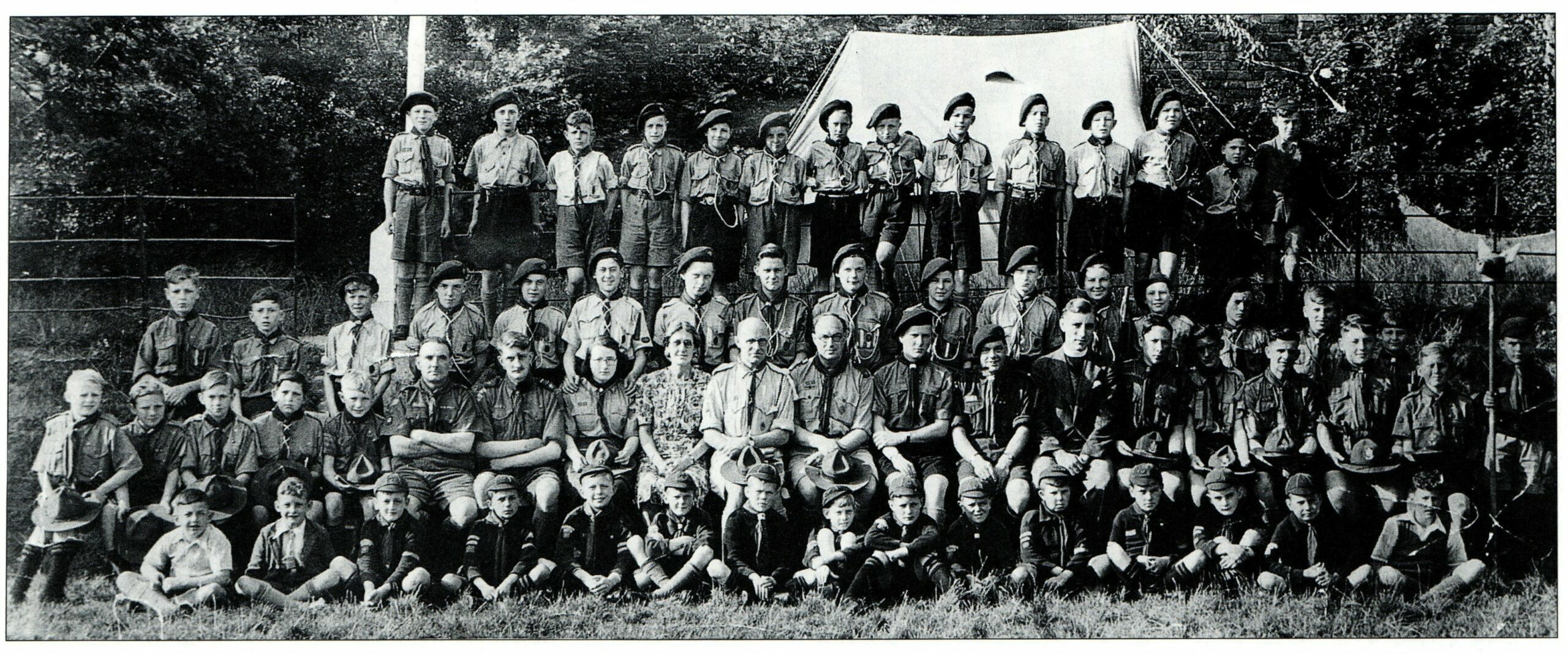
St Lawrence Scout Troop, around 1942. Image from The World of Netlam Bigg by John Gardiner, reproduced with permission.
On this page
The first St Lawrence Scout Troop
St Lawrence Scout Troop first began in April 1928. It was founded under the leadership of the Revd Arthur Braybrooke, with Archibald Andrews as Assistant Scoutmaster and Oliver Durr as Cubmaster.
The early group was not insignificant. It began with 17 Scouts and 22 Wolf Cubs, showing that there was already a strong appetite for Scouting among young people connected with St Lawrence in Stroud.
However, this first version of the troop did not last. In 1931, the Scoutmaster left the church and the incoming curate was not able to take over the Scout duties. Without the necessary adult leadership, the troop ceased.
1928
The first St Lawrence Scout Troop began in April 1928.
17
The first troop began with 17 Scouts.
22
The early group also had 22 Wolf Cubs.
This early beginning matters because St Lawrence was not created from nothing in the late 1930s. There had already been a Scout Troop and Wolf Cub Pack connected with St Lawrence before Netlam Bigg later revived and strengthened the group.
Netlam Bigg re-establishes the troop
In 1937, Netlam Frederick Cordwell Bigg re-established St Lawrence Scout Troop. The group was registered on 15 January 1937.
The re-established troop began with 16 Scouts and 8 Wolf Cubs. Netlam Bigg brought energy, organisation and ambition to the revived group, building on his existing experience at Standish House Scout Group.
He was assisted by a capable team. Charles Docwra served as Scoutmaster, the Revd George Meek as Assistant Scoutmaster, and Albert Matty as Cubmaster. This combination of lay leadership and church connection gave the group the practical support it needed to grow.
The re-established St Lawrence Scout Troop had clear leadership from the start.
- 15 January 1937: the re-established troop was registered.
- Netlam Bigg: re-established and led the revival of the troop.
- Charles Docwra: served as Scoutmaster.
- Revd George Meek: served as Assistant Scoutmaster.
- Albert Matty: served as Cubmaster.
- 16 Scouts and 8 Wolf Cubs: the group’s starting strength in 1937.
This revival is one of the most important moments in the history of Scouting in Stroud. From this point, St Lawrence became a strong and active group, with its own headquarters, wartime service, Air Scout section, international outlook and lasting connection to the Scout Centre at Hollow Lane.
The link with Standish House
The St Lawrence story is closely connected to the story of Standish House Scout Group. Netlam Bigg had founded Standish House Scout Group in 1934, creating a pioneering Scout Group for boys who were hospital patients at Standish House.
When he re-established St Lawrence Scout Troop in 1937, he brought with him experience from that earlier work. The connection was also personal. Charles Docwra, who became Scoutmaster at St Lawrence, had previously been Cubmaster of Standish House Group.
This means the Standish House and St Lawrence stories are not separate threads. They are joined by people, leadership and a shared belief that Scouting should be active, inclusive and outward-looking.
Standish House showed Netlam Bigg’s commitment to inclusive Scouting. St Lawrence showed his ability to build and organise a strong local Scout Group. Together, they form a major part of the story inherited by Stroud Valley Scouts today.
A new home at Hollow Lane
One of the most significant developments for St Lawrence Scout Troop was the creation of a headquarters and training ground at Hollow Lane.
The site was a half-acre piece of land owned by Mrs Bigg. A large hut, approximately 60 feet by 27 feet, was donated by Mr A. C. Cook. This hut provided a main hall, a meeting room and two smaller rooms.
A smaller hut became the Rover Den, while existing greenhouses were converted into a kitchen, toilets and storerooms. This combination of land, donated buildings and practical adaptation gave the St Lawrence Scouts a proper base for meetings, training and group life.
The new St Lawrence headquarters and training grounds were officially opened on Saturday 17 September 1938 by Lt Col G. Walton, Home Commissioner from Imperial Headquarters.
Hollow Lane became the physical home of the St Lawrence story.
- Mrs Bigg: owned the half-acre site at Hollow Lane.
- A. C. Cook: donated the large hut used by the Scouts.
- 60 feet by 27 feet: the approximate size of the main hut.
- Rover Den: a smaller hut was used by the Rovers.
- Greenhouses: converted into kitchen, toilets and storerooms.
- 17 September 1938: the headquarters and training grounds were officially opened.
Hollow Lane would remain central to the story. The later Stroud Valley Scouting Centre grew from this long association between the site and local Scouting.
Wartime service
During the Second World War, St Lawrence Scouts were involved in practical service to the local community. Their work reflected the wider Scout tradition of service and the particular demands placed on communities during wartime.
Scouts supported the Stroud Women’s Voluntary Service by collecting materials such as bones, old iron and rags. These collections were part of the wider national effort to make use of waste and salvage materials during the war.
Netlam Bigg also represented the Scout Association on the Evacuation Reception Committee. Senior Scouts helped evacuees at Tuck’s Hall on Sundays, supporting the practical work of receiving and assisting people displaced by the war.
St Lawrence Scouts and Stroud and Uplands Scouts also helped with fire watches at Stroud General Hospital. They ran messages and manned telephones at the Trinity Rooms and First Aid Post.
Scouts collected bones, old iron, rags and other materials in support of wartime community efforts.
Senior Scouts helped evacuees at Tuck’s Hall, while Netlam Bigg represented Scouting on the Evacuation Reception Committee.
Scouts helped with fire watches, ran messages and manned telephones at local wartime facilities.
This wartime work shows how St Lawrence Scouts were trusted with real responsibility. They were young people, but they were also part of the practical civic response to war in Stroud.
The Waste Paper Campaign
One of the most substantial wartime contributions associated with local Scouting was the Waste Paper Campaign.
In February 1940, Netlam Bigg was appointed organiser for the Waste Paper Campaign by the Stroud and Tetbury Scouts’ Association. Scouts collected waste paper as part of the wartime salvage effort.
Over seven years, Scouts collected nearly 1,500 tons of paper and raised around £7,000 for Scouting. The scale of that achievement is remarkable. It shows both sustained commitment and the ability of local Scouts to organise work that had real value.
The Waste Paper Campaign became one of the most striking examples of wartime Scout service in the area.
- February 1940: Netlam Bigg was appointed organiser of the campaign.
- Stroud and Tetbury Scouts’ Association: the campaign was organised through the local Scout association.
- Nearly 1,500 tons: the amount of paper collected over seven years.
- Around £7,000: the amount raised for Scouting through the campaign.
- Seven years: the work was sustained over a long period.
- Local service: the campaign combined wartime need with practical Scout organisation.
This same spirit of fundraising, collecting and working together appears again in the later Kandersteg story, when St Lawrence Scouts collected waste paper and cardboard every Saturday to help fund their 1949 expedition to Switzerland.
St Lawrence Air Scouts
In July 1941, Netlam Bigg received permission to start the first Air Scout troop in Gloucestershire. This was a significant development for St Lawrence and gave the group a distinctive wartime identity.
The St Lawrence Air Scouts developed links with RAF Aston Down. Their activities included aircraft identification, use of a link trainer and flights in Miles Master aircraft. These were serious and practical aviation-related experiences, not simply symbolic activities.
The Air Scouts’ colours were presented and dedicated in March 1943. In April 1943, the group camped at RNAS Yeovilton. The St Lawrence Air Scouts also had a prominent Drum and Fife Band, which became part of their public identity.
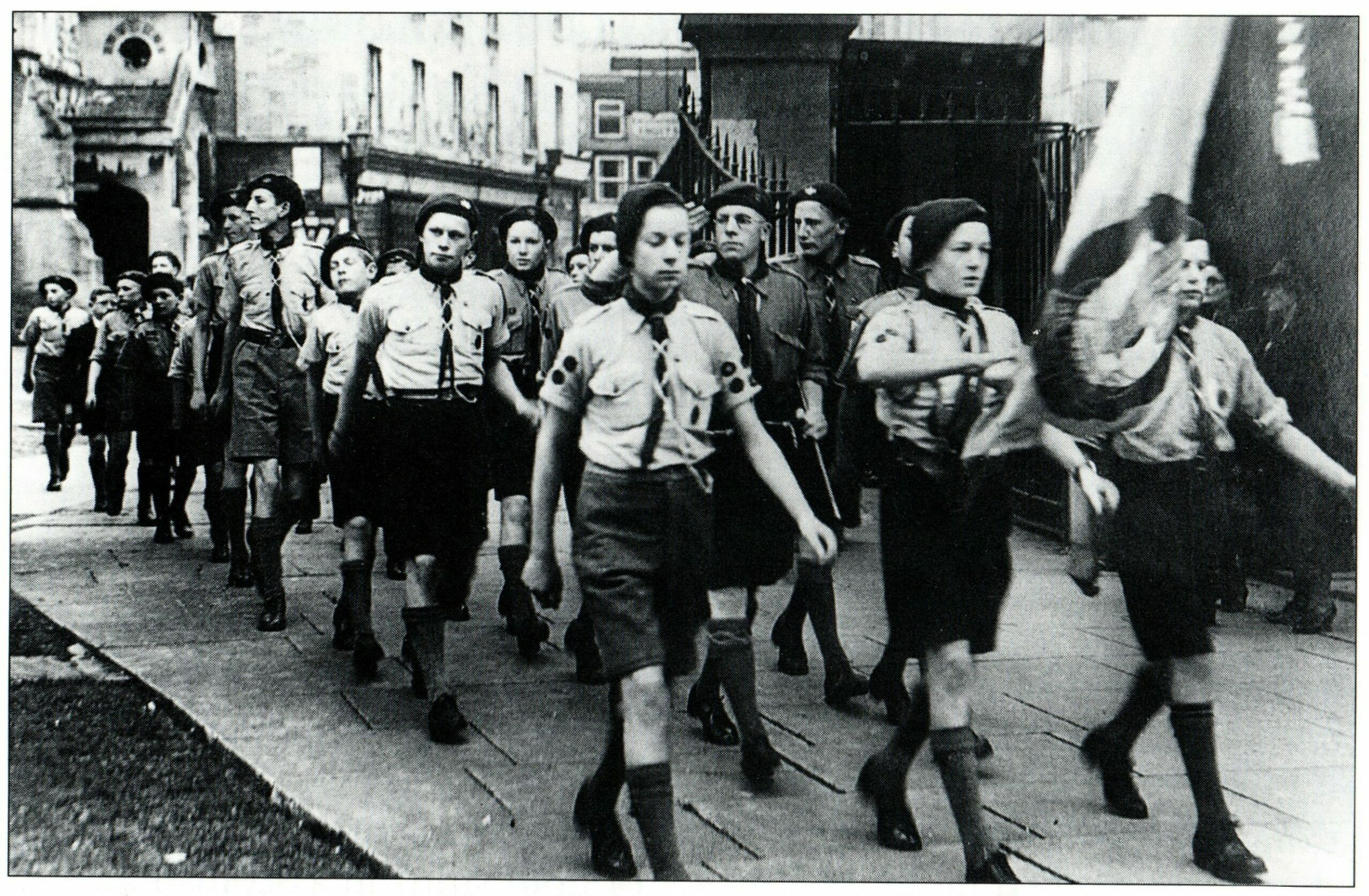
St Lawrence Air Scouts entering Stroud Parish Church grounds. Image from The World of Netlam Bigg by John Gardiner, reproduced with permission.
The creation of the Air Scout troop shows the ambition of St Lawrence at this point in its history. The group was not only maintaining ordinary Scout meetings during wartime. It was adapting, expanding and giving young people access to experiences connected with aviation and national service.
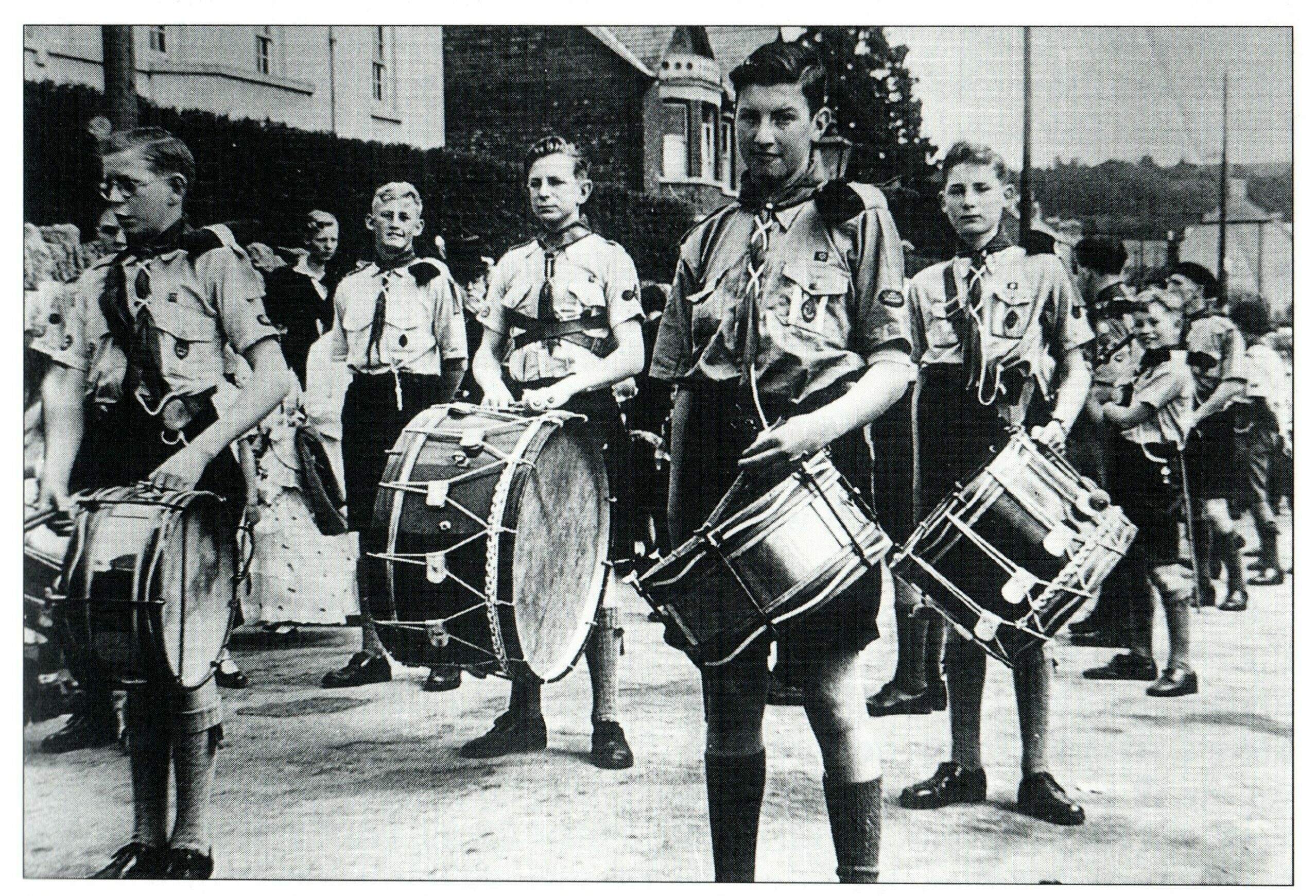
St Lawrence Air Scouts Drum and Fife Band. Image from The World of Netlam Bigg by John Gardiner, reproduced with permission.
The Air Scouts became one of the most distinctive parts of the St Lawrence story.
- July 1941: permission was given to start the first Gloucestershire Air Scout troop.
- RAF Aston Down: the Air Scouts developed links with the RAF station.
- Aircraft identification: one of the practical skills developed by the Air Scouts.
- Link trainer: the Scouts had aviation training experiences.
- Miles Master flights: some Scouts experienced flights connected with their Air Scout training.
- RNAS Yeovilton: the group camped there in April 1943.
Remembrance and the silver birches
The wartime story of St Lawrence Scout Troop also includes loss and remembrance.
At the VE Thanksgiving Service in May 1945, Netlam Bigg paid tribute to members connected with the group who had died: Albert Matty, John Roseblade, John Wilmot and Norman Jennison.
On 13 October 1945, a special service was held. A memorial scroll was dedicated, followed by a procession to the headquarters. Five silver birches were planted in memory of Lord Somers and the four members connected with St Lawrence who had died in service.
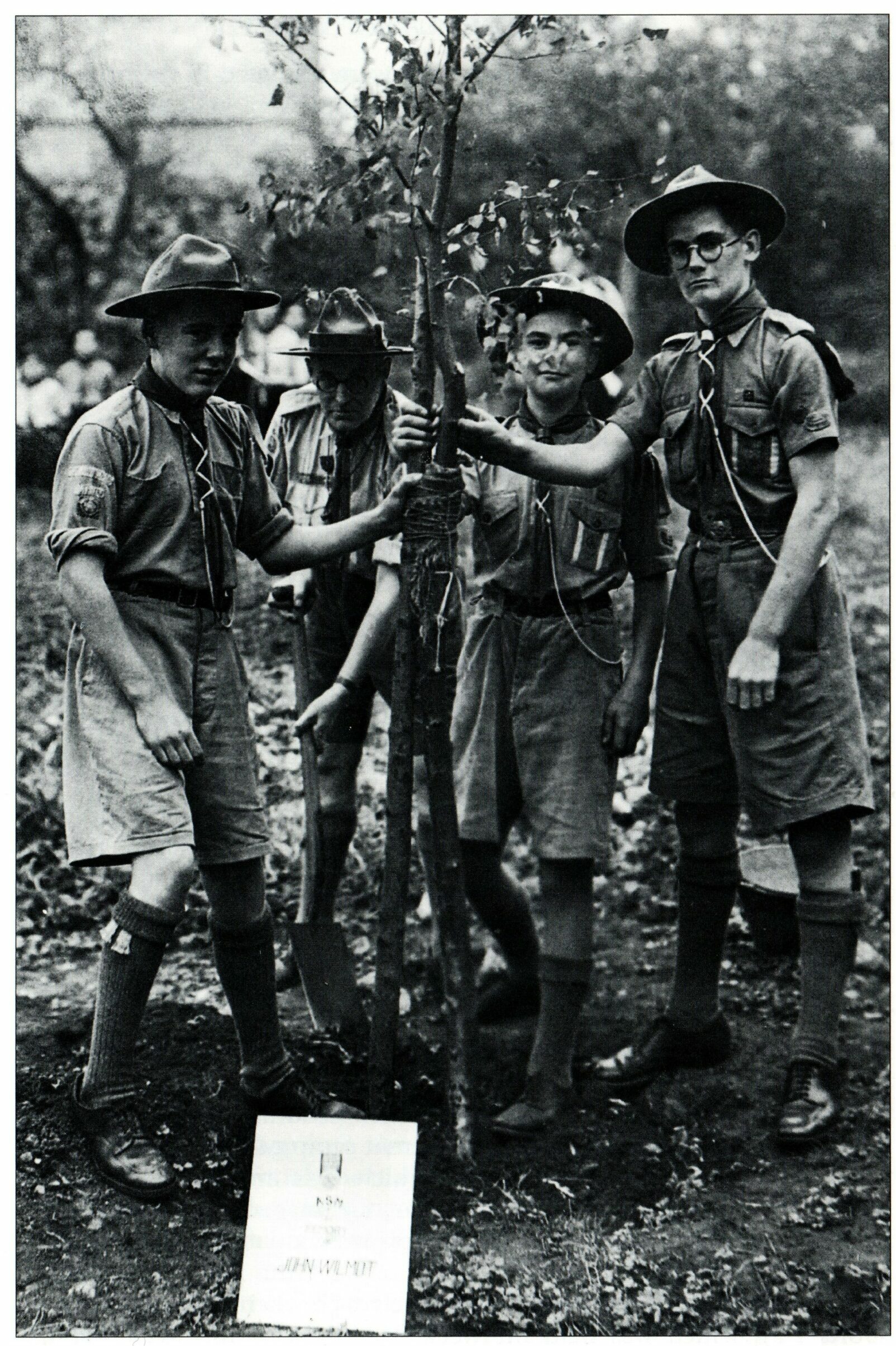
Planting a silver birch in memory of John Wilmot at St Lawrence. Image from The World of Netlam Bigg by John Gardiner, reproduced with permission.
Remembered by the group: Albert Matty, John Roseblade, John Wilmot and Norman Jennison were named in tribute by Netlam Bigg at the VE Thanksgiving Service in May 1945.
The planting of silver birches at Hollow Lane connected remembrance with the physical home of the group, making memory part of the landscape of St Lawrence Scouting.
This act of remembrance is one of the most moving parts of the St Lawrence story. It shows a group that did not simply pass through the war and move on. It paused, named those who had died, and created a living memorial at its headquarters.
The St Lawrence name
The name of the group also became part of its history. In 1953, the Local Association changed the title to 2nd Stroud. The church council objected because the deed referred to St Lawrence (Stroud).
The District Commissioner explained that the form 2nd Stroud (St Lawrence) followed headquarters administrative policy. The St Lawrence name, however, remained important and continued to identify the group’s roots and character.
This detail may seem administrative, but it matters because names carry history. St Lawrence was not just a convenient label. It marked the group’s church connection, its place in Stroud, and the identity built by the Scouts, Cubs, leaders and supporters who had carried it through the 1930s, the war years and beyond.
The St Lawrence name survived because it meant something locally. It connected the group with its origins, its supporters, its church link and its place in Stroud’s Scouting story.
The legacy today
St Lawrence Scout Troop is one of the key roots of today’s Stroud Valley Scouts. Its story includes early growth, revival, practical service, wartime responsibility, a permanent home at Hollow Lane, Air Scouting, remembrance and international adventure.
It also connects many of the other pages in this history project. Standish House connects through Netlam Bigg and Charles Docwra. Hollow Lane connects through the headquarters and Scout Centre. Kandersteg connects through the international outlook and fundraising spirit of the group.
The values that shaped St Lawrence are still visible in Scouting today: service, friendship, courage, belonging, practical skills, community support and adventure.
St Lawrence helps explain where Stroud Valley Scouts comes from.
- Service: Scouts supported the community during wartime.
- Belonging: the group grew from a local church and community setting.
- Adventure: St Lawrence later looked beyond Stroud to international Scouting.
- Remembrance: the group honoured those connected with it who died in service.
- Home: Hollow Lane became a lasting base for local Scouting.
- Legacy: Stroud Valley Scouts continues the wider story today.
Help continue the St Lawrence legacy
St Lawrence Scout Troop grew through local leadership, donated space, practical service, community support and the belief that young people should be trusted with real responsibility.
That same spirit continues at Stroud Valley Scouts today. Your donation helps us keep Scouting affordable, maintain and improve our Scout Centre, provide equipment and activities, support families where cost is a barrier, and give more young people the chance to learn skills for life.
A short timeline
Key moments in the St Lawrence Scout Troop story.
- April 1928: St Lawrence Scout Troop first begins.
- 1931: the first troop ceases after leadership changes.
- 15 January 1937: the re-established troop is registered.
- 17 September 1938: the new headquarters and training grounds open at Hollow Lane.
- February 1940: Netlam Bigg is appointed organiser of the Waste Paper Campaign.
- July 1941: permission is given to start the first Gloucestershire Air Scout troop.
- March 1943: the Air Scouts’ colours are presented and dedicated.
- April 1943: St Lawrence Air Scouts camp at RNAS Yeovilton.
- May 1945: Netlam Bigg pays tribute to those connected with the group who died in service.
- 13 October 1945: memorial service, scroll dedication and silver birch planting.
- 1953: the St Lawrence name is discussed and retained within the group identity.
Continue exploring our history
Go back to the main Our History page to explore the full story of Netlam Bigg, Standish House, Hollow Lane, Kandersteg and Stroud Valley Scouts.
Read about the pioneering Scout Group founded by Netlam Bigg for boys who were hospital patients at Standish House.
Follow the story of the St Lawrence Scouts who fundraised locally and travelled from Stroud to Switzerland in 1949.
Sources and acknowledgements
This page has been adapted from The World of Netlam Bigg: A Centenary Celebration, researched by John Gardiner and published in 1999. Material and images from the book are reproduced with permission.
The account has been rewritten for the Stroud Valley Scouts website using contemporary language while preserving the people, dates, events and meaning of the original history.
Historic image credits: unless otherwise stated, images are from The World of Netlam Bigg by John Gardiner, reproduced with permission.