Hollow Lane is at the heart of the Stroud Valley Scouts story. Long before the current Scout Centre, the site became the home of St Lawrence Scout Troop, with land, buildings and local support coming together to create a lasting base for Scouting in Stroud.
Hollow Lane and the Scout Centre
From St Lawrence headquarters to Stroud Valley Scouting Centre
The story of Hollow Lane is the story of how local Scouting found a home. From Mrs Bigg’s half-acre site and the original St Lawrence headquarters opened in 1938, through wartime service and remembrance, to the opening of the Stroud Valley Scouting Centre in 1982, Hollow Lane has remained central to Scouting in Stroud.
- 1938: the St Lawrence headquarters and training grounds opened at Hollow Lane
- Mrs Bigg: owned the half-acre site that became the group’s home
- A. C. Cook: donated the large hut used by the Scouts
- 1945: silver birches were planted in remembrance at the headquarters
- 1982: the Stroud Valley Scouting Centre was officially opened
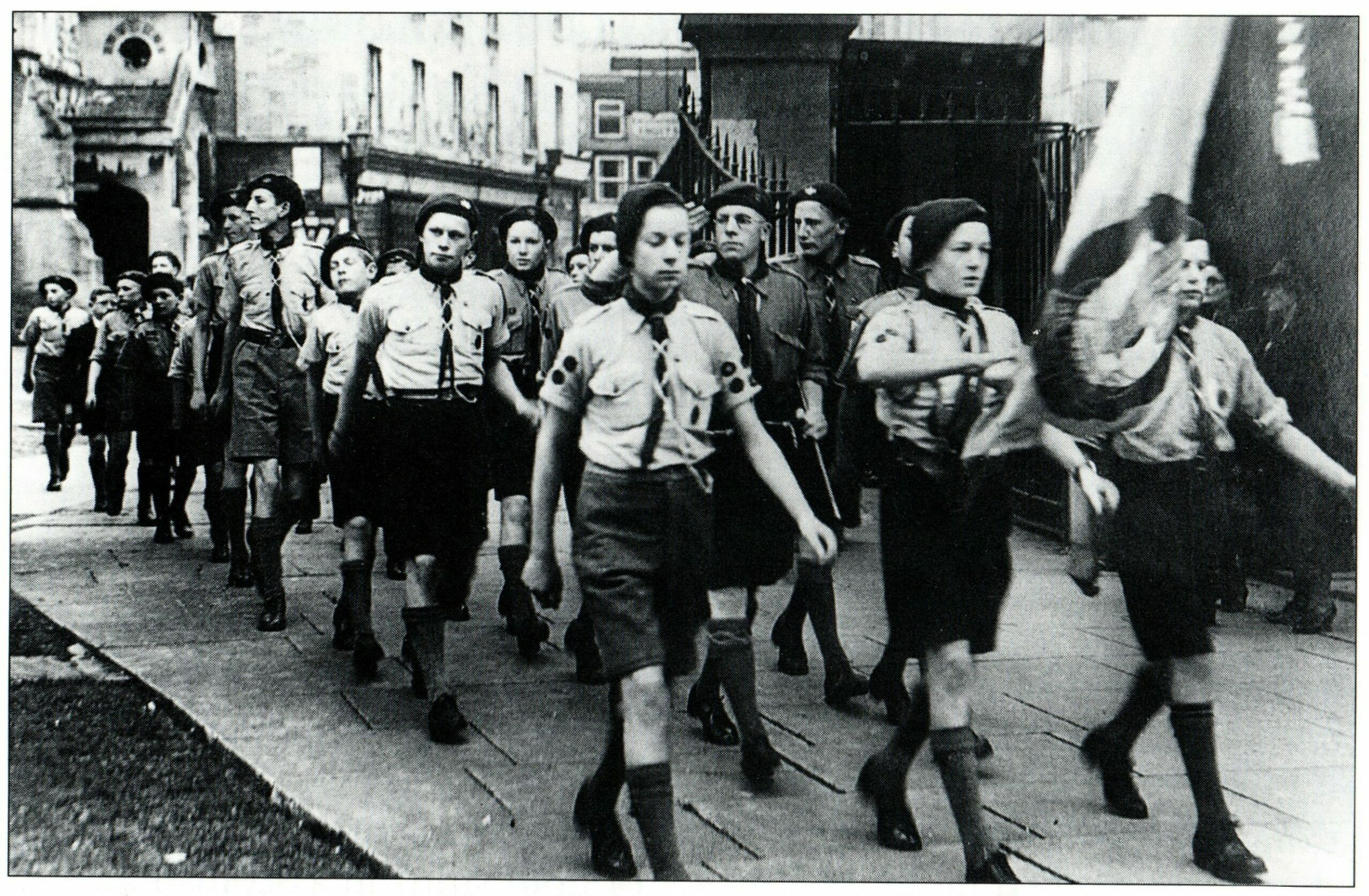
St Lawrence Air Scouts entering Stroud Parish Church grounds. Image from The World of Netlam Bigg by John Gardiner, reproduced with permission.
On this page
- Why Hollow Lane matters
- Mrs Bigg’s half-acre site
- The hut donated by A. C. Cook
- The 1938 opening
- A home for St Lawrence Scouts
- Hollow Lane during the wartime years
- Remembrance and the silver birches
- Towards the Stroud Valley Scouting Centre
- The 1982 opening
- The Netlam Bigg Room
- Hollow Lane today
- Help care for Hollow Lane today
Why Hollow Lane matters
Hollow Lane matters because it gives the history of Stroud Valley Scouts a physical home. The stories of Netlam Bigg, St Lawrence Scout Troop, wartime service, remembrance and the later Stroud Valley Scouting Centre all meet at this site.
For the St Lawrence Scouts, Hollow Lane was not simply a meeting place. It was a headquarters, training ground, storage site, place of ceremony and place of memory. It became the base from which much of the group’s later story developed.
The site also shows how local Scouting was built through generosity and practical action. Land was made available. A large hut was donated. Existing structures were adapted. Supporters raised money. Volunteers made the site work. That same pattern of local effort continues in the Scout Centre today.
Hollow Lane links the early St Lawrence headquarters with the modern Stroud Valley Scouting Centre. It is one of the strongest threads connecting past and present in our group’s history.
Mrs Bigg’s half-acre site
The original St Lawrence headquarters at Hollow Lane was created on a half-acre piece of land owned by Mrs Bigg. This detail is important because it shows the personal and family commitment behind the development of the site.
Netlam Bigg’s work in Scouting was supported by practical resources and local relationships. The availability of land at Hollow Lane gave St Lawrence Scout Troop the opportunity to establish a permanent base rather than relying only on borrowed or temporary meeting spaces.
A permanent site changed what the group could become. It allowed the Scouts to meet, store equipment, train, gather, remember, fundraise and build a shared identity around a place of their own.
Hollow Lane
The site became the home of St Lawrence Scouts.
½ acre
The site was a half-acre piece of land owned by Mrs Bigg.
Home
It gave the group a lasting headquarters and training ground.
The hut donated by A. C. Cook
The site was transformed by the donation of a large hut by Mr A. C. Cook. The hut was approximately 60 feet by 27 feet, giving the Scouts a substantial building for their headquarters.
Inside, the hut provided a main hall, a meeting room and two smaller rooms. This gave the group the flexibility to run meetings, activities, training and administration from the same base.
A smaller hut was used as the Rover Den, giving the older Scout section its own space. Existing greenhouses were also adapted and converted into a kitchen, toilets and storerooms.
These details show the practical creativity behind the early headquarters. Hollow Lane was not created by building a perfect new centre from scratch. It was built by using what was available, adapting it, and making it work for Scouting.
The first Hollow Lane headquarters was built through donation, adaptation and practical effort.
- A. C. Cook: donated the large hut used by the Scouts.
- 60 feet by 27 feet: the approximate size of the main hut.
- Main hall: gave the group a large central activity space.
- Meeting room and smaller rooms: supported group organisation and activities.
- Rover Den: a smaller hut was used by the Rover Scouts.
- Greenhouses: converted into kitchen, toilets and storerooms.
The 1938 opening
The new St Lawrence headquarters and training grounds were officially opened on Saturday 17 September 1938.
The opening was carried out by Lt Col G. Walton, Home Commissioner from Imperial Headquarters. His presence shows that the new headquarters was seen as a significant development, not just a local building project.
The opening of the headquarters gave St Lawrence Scout Troop a clear base from which to grow. It came only a short time after Netlam Bigg had re-established the troop in 1937, making Hollow Lane part of the group’s revival and expansion.
The St Lawrence headquarters and training grounds at Hollow Lane were officially opened on Saturday 17 September 1938 by Lt Col G. Walton, Home Commissioner from Imperial Headquarters.
A home for St Lawrence Scouts
Hollow Lane became the centre of St Lawrence Scout life. It was where the group met, stored equipment, trained, gathered and built its identity.
By the early 1940s, St Lawrence had become a strong and active Scout Group. The photograph of the troop around 1942 shows the scale and confidence of the group during this period.
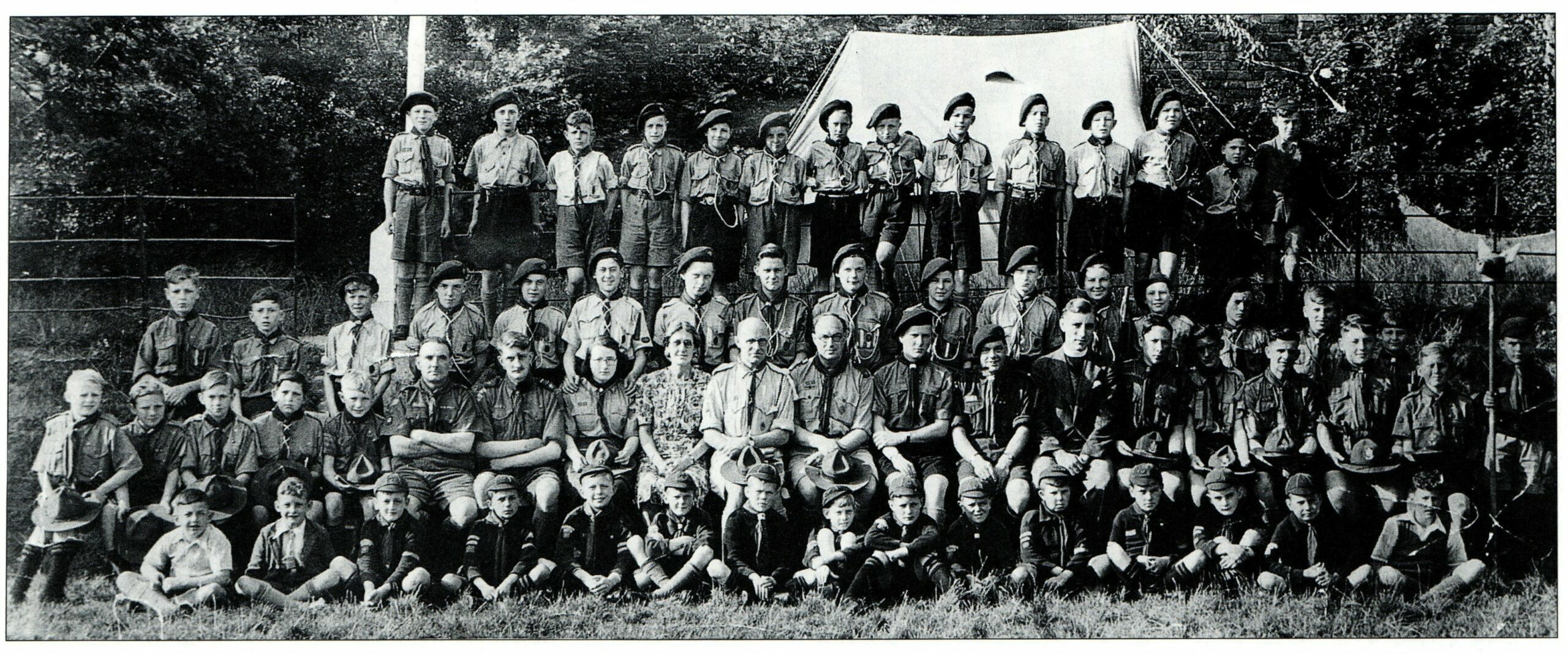
St Lawrence Scout Troop, around 1942. Image from The World of Netlam Bigg by John Gardiner, reproduced with permission.
The headquarters also supported the wider development of the group, including the Air Scouts, Rover Scouts, wartime service and later international adventures. Hollow Lane was therefore not just a building. It was the working base for a wide and ambitious programme of Scouting.
Hollow Lane during the wartime years
During the Second World War, St Lawrence Scouts were involved in practical service to the local community. Hollow Lane was part of that story because it provided the group with a base for organisation, storage and activity.
Scouts supported the Stroud Women’s Voluntary Service through salvage collections, including bones, old iron and rags. Netlam Bigg represented the Scout Association on the Evacuation Reception Committee, and senior Scouts helped evacuees at Tuck’s Hall on Sundays.
The Scouts also helped with fire watches at Stroud General Hospital, ran messages and manned telephones at the Trinity Rooms and First Aid Post.
The Waste Paper Campaign became one of the largest and most striking examples of local Scout service. In February 1940, Netlam Bigg was appointed organiser of the campaign by the Stroud and Tetbury Scouts’ Association. Over seven years, Scouts collected nearly 1,500 tons of paper and raised around £7,000 for Scouting.
The wartime story shows Hollow Lane as the home of a group actively serving its community.
- Salvage collections: Scouts supported local wartime material collections.
- Evacuee support: senior Scouts helped evacuees at Tuck’s Hall.
- Fire watches: Scouts assisted at Stroud General Hospital.
- Messages and telephones: Scouts helped at the Trinity Rooms and First Aid Post.
- Waste Paper Campaign: organised locally by Netlam Bigg from February 1940.
- Nearly 1,500 tons: the amount of paper collected by Scouts over seven years.
Later, Hollow Lane would also be linked with fundraising for the 1949 Kandersteg expedition, when Scouts collected waste paper and cardboard every Saturday and stored it at the headquarters.
Remembrance and the silver birches
Hollow Lane was also a place of remembrance.
At the VE Thanksgiving Service in May 1945, Netlam Bigg paid tribute to Albert Matty, John Roseblade, John Wilmot and Norman Jennison, all connected with the group and remembered for their wartime service.
On 13 October 1945, a special service was held. A memorial scroll was dedicated, followed by a procession to the headquarters. Five silver birches were planted in memory of Lord Somers and the four members connected with St Lawrence who had died in service.
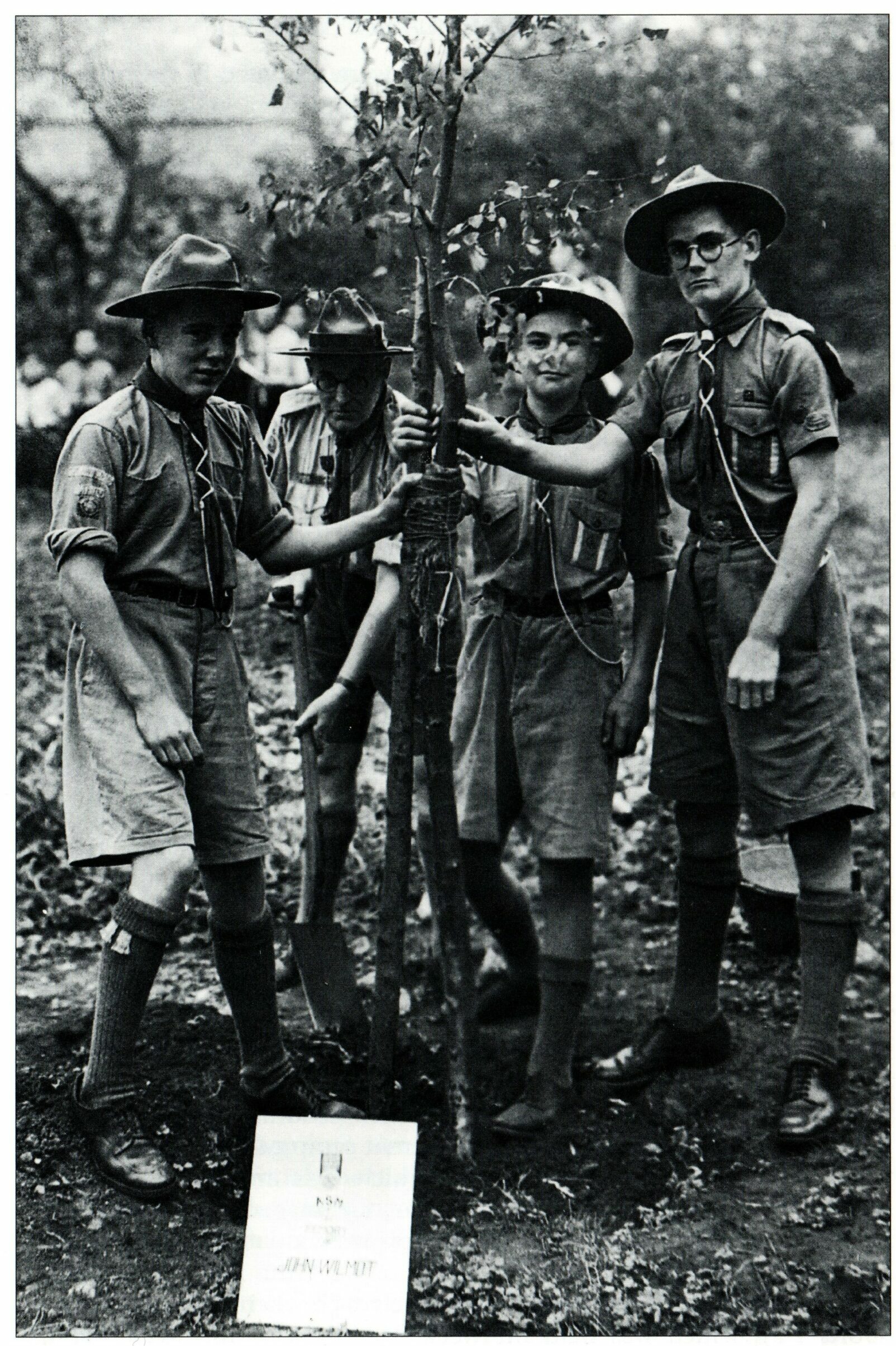
Planting a silver birch in memory of John Wilmot at St Lawrence. Image from The World of Netlam Bigg by John Gardiner, reproduced with permission.
A living memorial: The silver birches made remembrance part of the Hollow Lane site itself.
This is one of the most moving parts of the Hollow Lane story: the headquarters was not only a place for meetings and activities, but also a place where the group remembered those connected with it who had died in service.
Towards the Stroud Valley Scouting Centre
The story of Hollow Lane continued long after the original St Lawrence headquarters opened in 1938. Over time, the site developed from the early headquarters and training ground into the wider Stroud Valley Scouting Centre.
The later centre brought together the legacy of St Lawrence, St Peter’s and the wider local Scouting community. It became a shared facility serving not only one group, but a much broader Scouting area.
This transition is important because it shows how the original Hollow Lane site continued to evolve. The early donation of land and buildings created a foundation that later generations could build on.
Hollow Lane began as the St Lawrence headquarters and training ground. By 1982, it had become the site of the Stroud Valley Scouting Centre, serving a wider Scouting community.
The 1982 opening
The Stroud Valley Scouting Centre was officially opened on 10 July 1982.
The opening plaque was unveiled by Cllr Roy Nicholas. The Bigg family were praised for their contribution to the history and development of Scouting at Hollow Lane.
The project cost around £17,000, with at least £7,000 raised by Scout supporters. This shows that, just as in the earlier Hollow Lane story, the new centre was made possible by local effort, commitment and fundraising.
The centre served St Lawrence and St Peter’s Groups, along with Scouts from Brimscombe, Eastcombe, Bussage and France Lynch. It was therefore a true Scouting centre for the area, not simply a hall for one group.
The opening of the Stroud Valley Scouting Centre marked a major new chapter at Hollow Lane.
- 10 July 1982: the Stroud Valley Scouting Centre was officially opened.
- Cllr Roy Nicholas: unveiled the opening plaque.
- Around £17,000: the cost of the project.
- At least £7,000: raised by Scout supporters.
- St Lawrence and St Peter’s: two of the groups served by the centre.
- Wider area: the centre also supported Brimscombe, Eastcombe, Bussage and France Lynch.
The work included a hall, kitchen and store, while the old Rover Den was refurbished. The Chapel Street gates were dedicated to Bernard Hewlett, adding another layer of memory and local Scouting history to the site.
The Netlam Bigg Room
Netlam Bigg was present at the opening of the Stroud Valley Scouting Centre in 1982. By then, he was 84 years old.
He thanked the Scouts for the tributes paid to his late wife Margaret and to himself. This was a powerful moment because the new centre stood on a site so closely connected with the Bigg family, St Lawrence Scouting and decades of local service.
Netlam unveiled a plaque in the entrance hall, officially naming the Netlam Bigg Room. This room gave his name a permanent place within the building and recognised the role he had played in shaping Scouting at Hollow Lane.
At the 1982 opening, Netlam Bigg unveiled a plaque in the entrance hall officially naming the Netlam Bigg Room, linking the modern centre directly with the person who had helped shape so much of the Hollow Lane story.
Hollow Lane today
Today, Hollow Lane remains the home of Stroud Valley Scouts. The site continues to support weekly Scouting, camps, activities, meetings, community use and the wider work of the group.
The buildings and site have changed since 1938, but the underlying story is familiar: local people giving time, money, skill and energy so that young people have somewhere to belong, learn and grow.
Hollow Lane is therefore not just part of our past. It is part of our present and future. Every section night, camp preparation evening, community booking, maintenance project and young person’s first visit adds another layer to the story that began with the St Lawrence headquarters.
Continuing the legacy: Hollow Lane has been a home for Scouting for generations. Stroud Valley Scouts continues to care for the site so it can serve young people and the wider community for years to come.
The story of the Scout Centre is still being written by today’s Scouts, volunteers, families, supporters and community users.
Help care for Hollow Lane today
Hollow Lane has always depended on practical support from local people — from land and buildings in the 1930s, to fundraising for the Scout Centre in 1982, to the ongoing care of the site today.
Your donation helps Stroud Valley Scouts maintain and improve the Scout Centre and Coach House, keep the site safe and welcoming, provide equipment and activities, and make sure Hollow Lane continues to serve young people and the wider community for years to come.
A short timeline
Key moments in the Hollow Lane and Scout Centre story.
- 1937: Netlam Bigg re-establishes St Lawrence Scout Troop.
- 1938: Mrs Bigg’s half-acre Hollow Lane site becomes the group’s home.
- 17 September 1938: the new St Lawrence headquarters and training grounds are officially opened.
- 1940s: Hollow Lane supports the group’s wartime service, salvage and Scouting activities.
- 13 October 1945: memorial service, scroll dedication and silver birch planting.
- 1949: Hollow Lane supports the waste paper and cardboard fundraising for Kandersteg.
- 10 July 1982: the Stroud Valley Scouting Centre is officially opened.
- 1982: Netlam Bigg unveils the plaque naming the Netlam Bigg Room.
- Today: Hollow Lane remains the home of Stroud Valley Scouts.
Continue exploring our history
Go back to the main Our History page to explore the full story of Standish House, St Lawrence, Netlam Bigg, Kandersteg and Stroud Valley Scouts.
Read how St Lawrence Scout Troop was re-established by Netlam Bigg and became rooted at Hollow Lane.
Read about the local Scout leader whose work connects Standish House, St Lawrence, Hollow Lane and the wider history of Scouting in Stroud.
Sources and acknowledgements
This page has been adapted from The World of Netlam Bigg: A Centenary Celebration, researched by John Gardiner and published in 1999. Material and images from the book are reproduced with permission.
The account has been rewritten for the Stroud Valley Scouts website using contemporary language while preserving the people, dates, events and meaning of the original history.
Historic image credits: unless otherwise stated, images are from The World of Netlam Bigg by John Gardiner, reproduced with permission.