Standish House Scout Group is one of the most remarkable stories in the history of Scouting around Stroud. Founded by Netlam Frederick Cordwell Bigg in 1934, it brought Scouting to boys who were hospital patients at Standish House and connected them with the wider Scout movement.
Standish House Scout Group
A pioneering Scout Group for boys at Standish House
This is a story about inclusion, courage, friendship and local service. Standish House Scout Group was not a small side note in Stroud’s Scouting history. It was a pioneering example of Scouting reaching young people who might otherwise have been left out.
- Standish House was built around 1830 and later became a hospital site
- Netlam Bigg founded Standish House Scout Group in 1934
- 21 Scouts were members when the troop officially began
- 18 Wolf Cubs were formally enrolled in January 1935
- Kenneth Newman later received the Cornwell Decoration, often known as the Scouts’ VC
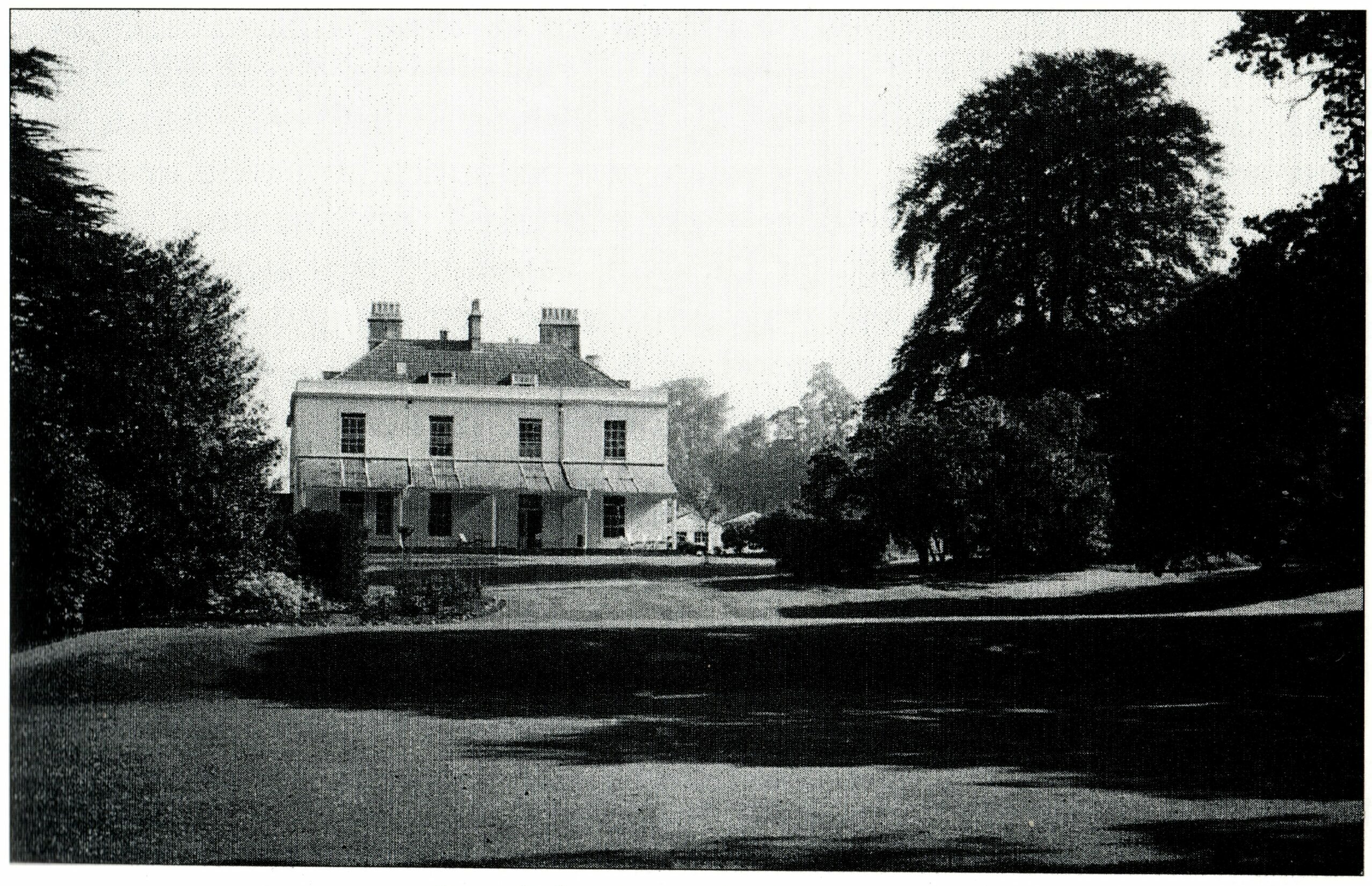
Standish House, built around 1830. Image from The World of Netlam Bigg by John Gardiner, reproduced with permission.
On this page
- Standish House before Scouting
- Netlam Bigg’s idea
- The Scout Troop begins in 1934
- The Wolf Cub Pack
- Life in Standish House Scout Group
- Field days, visitors and celebrations
- International links
- Kenneth Newman and the Scouts’ VC
- Later Standish House Scouting
- The link to St Lawrence and Stroud Valley Scouts
- Why this story matters today
- Help us keep Scouting accessible today
Standish House before Scouting
Standish House was built around 1830 and stood on the slopes of Moreton Hill, looking out across the Severn Vale. Before it became part of the local Scouting story, it had already served an important role in the life of the wider community.
During the First World War, Standish House was used as a Red Cross hospital for sick and wounded soldiers. From the 1920s, part of the hospital was used for boys and girls with disabilities or serious illnesses. It was a place of care, treatment and recovery — but also, for many young people, a place where ordinary childhood opportunities could be limited.
This setting is important. The Standish House Scout Group was not simply another local troop. It was created in a hospital environment, for boys whose lives were shaped by illness, injury or disability. That made the arrival of Scouting at Standish House especially significant.
A note on language: Some historic sources use period terms for disabled young people that would not be used today. This page uses contemporary wording while preserving the meaning of the original accounts.
Netlam Bigg’s idea
Netlam Frederick Cordwell Bigg was already deeply involved in local community life. He was a churchman, organiser, philanthropist and supporter of youth work, music and drama. His Scouting work would become one of the most important parts of his public service.
Netlam had set his heart on becoming a Scoutmaster at Standish House. The idea was ambitious and unusual. Rather than assuming that hospital patients could not take part in Scouting, he saw a way of adapting the movement so that boys at Standish House could share in its promise, identity and fellowship.
The result was Standish House Scout Group. It was created for boys who were hospital patients with physical disabilities and was described in The World of Netlam Bigg as unique and the first of its kind in the county.
Netlam Bigg
Local Scout leader and founder of Standish House Scout Group.
Inclusion
Giving hospital patients the chance to belong to Scouting.
Unique
Described as the first Scout Group of its kind in the county.
The Scout Troop begins in 1934
Standish House Scout Group officially began on 26 May 1934. At the start, the troop had 21 Scouts. Although Standish House was just over the Gloucester boundary, the group was administered through Stroud District, which helped connect it with the wider local Scouting structure.
Netlam Bigg did not work alone. Ernest Pilling, who had previously been connected with 1st Eastcombe, helped him run the troop. This mattered because Standish House needed not just goodwill, but practical Scout leadership, organisation and continuity.
The early troop gave the boys at Standish House much more than an occasional activity. It gave them identity as Scouts, a shared promise, a group structure, ceremonies and links to the wider movement. They were not simply being entertained; they were being welcomed into Scouting.
The first Standish House Scout Troop combined hospital care with real Scouting.
- 26 May 1934: Standish House Scout Group officially began.
- 21 Scouts: the number of Scouts in the troop at its start.
- Stroud District: the group was administered through Stroud despite being just over the Gloucester boundary.
- Ernest Pilling: helped Netlam Bigg run the troop.
- Purpose: to bring full Scouting to boys who were hospital patients.
- Legacy: the group became a pioneering example of inclusive Scouting.
The Wolf Cub Pack
The Scout Troop was followed by the creation of a Wolf Cub Pack. This extended the opportunity to younger boys at Standish House and brought them into the junior section of the Scout movement.
On 27 January 1935, 18 young boy patients were formally enrolled into the Standish House Wolf Cub Pack. The ceremony included the breaking of the flag, prayers, the Cub Law and Promise, and the presentation of group scarves.
These details are important because they show that the boys were not given a diluted version of Scouting. The ceremony followed the familiar pattern of belonging and commitment that generations of Cubs and Scouts have known. The flag, promise, law and scarf gave the Standish House Cubs the same sense of identity as other members of the movement.
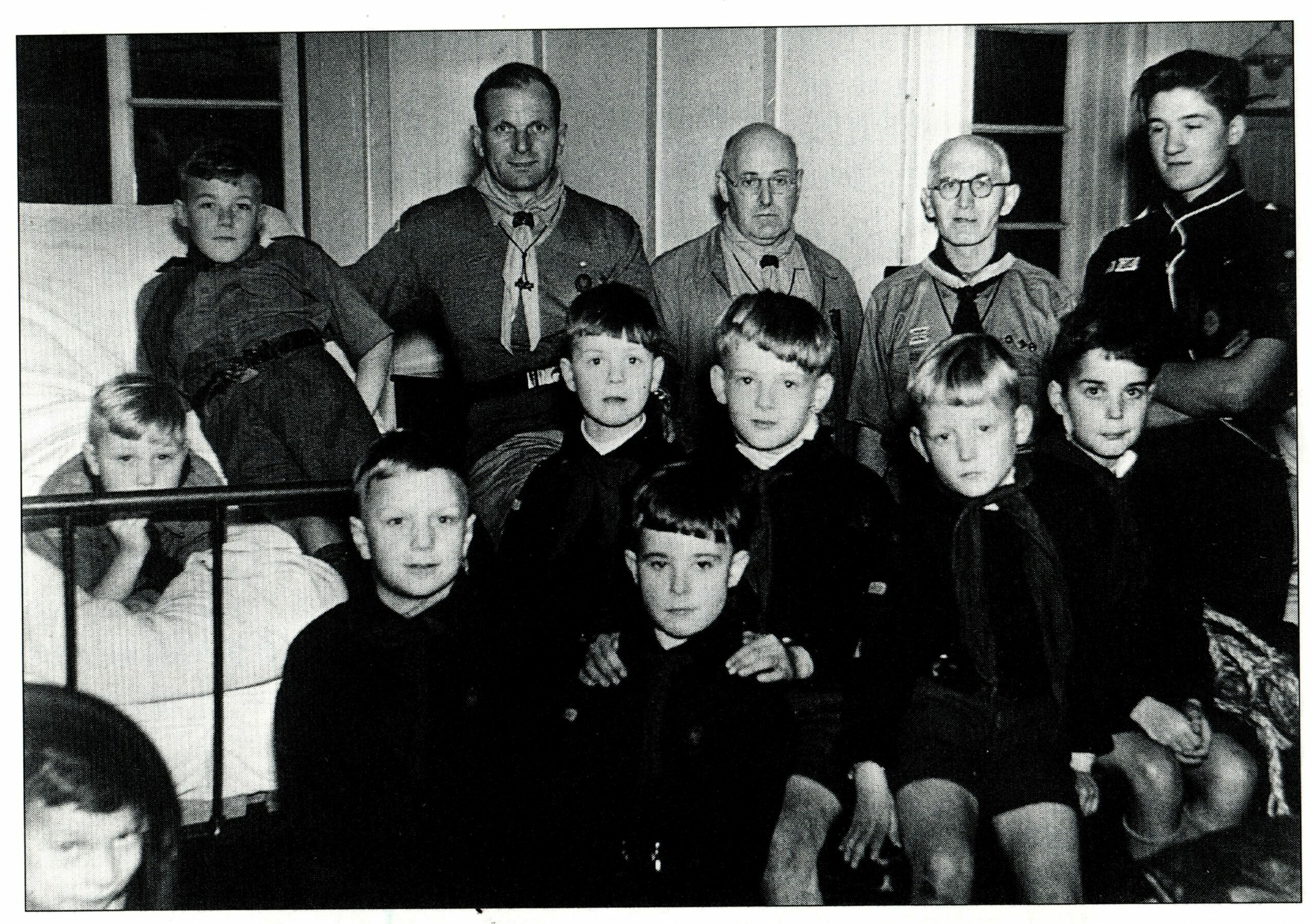
Wolf Cub gathering at Standish Hospital, around 1960. Image from The World of Netlam Bigg by John Gardiner, reproduced with permission.
The Wolf Cub Pack is one of the clearest examples of what made Standish House Scouting so powerful: boys who were patients were given a full place in the Scout family, with ceremonies, identity and belonging.
Life in Standish House Scout Group
Standish House Scout Group quickly became part of the wider Scouting world. The boys took part in ceremonies, received visitors, welcomed other Scout groups, celebrated public occasions and built friendships beyond the hospital.
This is one of the most moving parts of the story. The group was not hidden away. Other Scouts and Cubs came to Standish House. The boys at Standish House were seen, recognised and treated as brother Scouts.
In May 1935, Standish House was involved in Silver Jubilee celebrations. In the summer of 1936, the Standish House Pack Flag was presented. These events gave the group moments of ceremony and public recognition, reinforcing the fact that the boys were part of the wider movement and the wider community.
Flags, promises, scarves and public occasions gave Standish House Scouts and Cubs a visible place in the movement.
The boys were not just hospital patients taking part in activities. They were Scouts and Cubs, with the same identity and fellowship as other members.
The group was recognised locally and became known as a pioneering example of Scouting for boys with disabilities.
Field days, visitors and celebrations
Standish House Scout Group developed strong connections with other local groups. Scouts and Cubs from Wycliffe College, Eastcombe, Stroud and Uplands, Newent and other groups visited Standish House.
A field day in the summer of 1936 brought together Scouts and Cubs from across the area. These visits gave the Standish House boys contact with other young people in the movement and helped make the group part of a shared local Scouting network.
The value of this should not be underestimated. For boys living in a hospital setting, visits, field days and celebrations were a way of connecting with the wider world. Scouting gave them friendship, structure and a sense of common purpose.
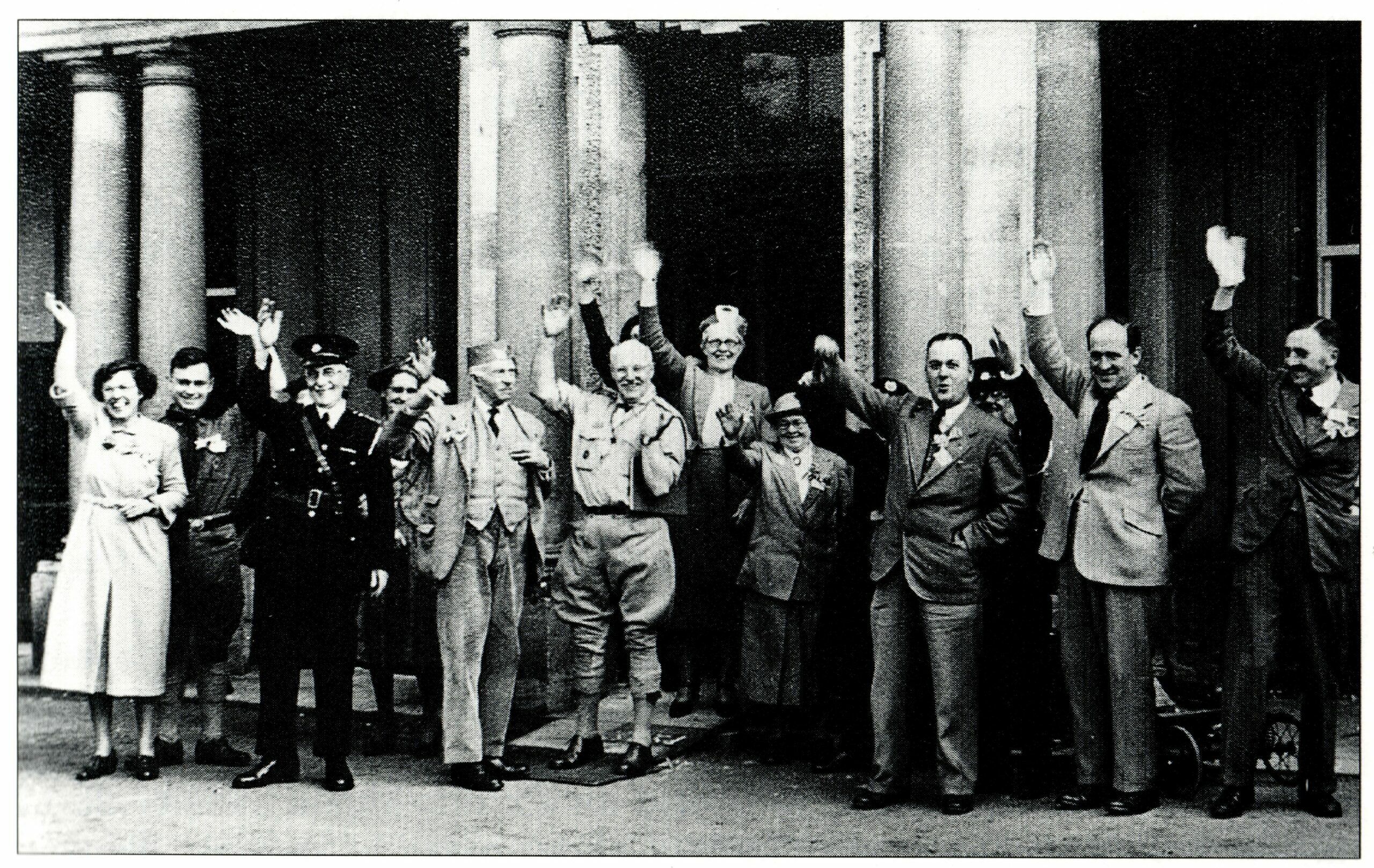
Jubilation at the Coronation Party, Cowley Manor. Image from The World of Netlam Bigg by John Gardiner, reproduced with permission.
The records show a group that was active, visible and connected. Standish House Scouting was about more than the weekly running of a troop or pack. It was about creating moments that helped young people feel valued and included.
International links
Standish House Scout Group also formed links beyond Gloucestershire. In 1938, the group received gifts from Scouts in Argentina, including a flag and an illustrated album.
This detail is a reminder that Scouting has always been international in character. Even a Scout Group based in a hospital at Standish House was connected to the wider brotherhood of Scouting.
This international thread later appears again in the St Lawrence story, especially through the 1947 Jamboree of Peace and the 1949 Kandersteg expedition. Netlam Bigg strongly believed in international friendship through Scouting, and the Standish House links with Argentine Scouts were an early example of that wider outlook.
The gift from Argentine Scouts shows that Standish House was not isolated from the wider movement. Its Scouts and Cubs were part of an international Scouting family.
Kenneth Newman and the Scouts’ VC
One of the most powerful stories connected with Standish House is the story of Kenneth Newman.
Kenneth Newman was a Standish House Scout who received the Cornwell Decoration in 1939. The decoration was often known as the Scouts’ VC, reflecting the exceptional courage and character it recognised.
Kenneth had been badly injured as a child and was confined to bed, but he continued with his school work and remained committed to Scouting. His courage, perseverance and devotion to the movement were recognised through the award.
He was the first Gloucestershire Scout to receive the honour. His story became one of the most notable examples of the spirit of Standish House Scout Group.
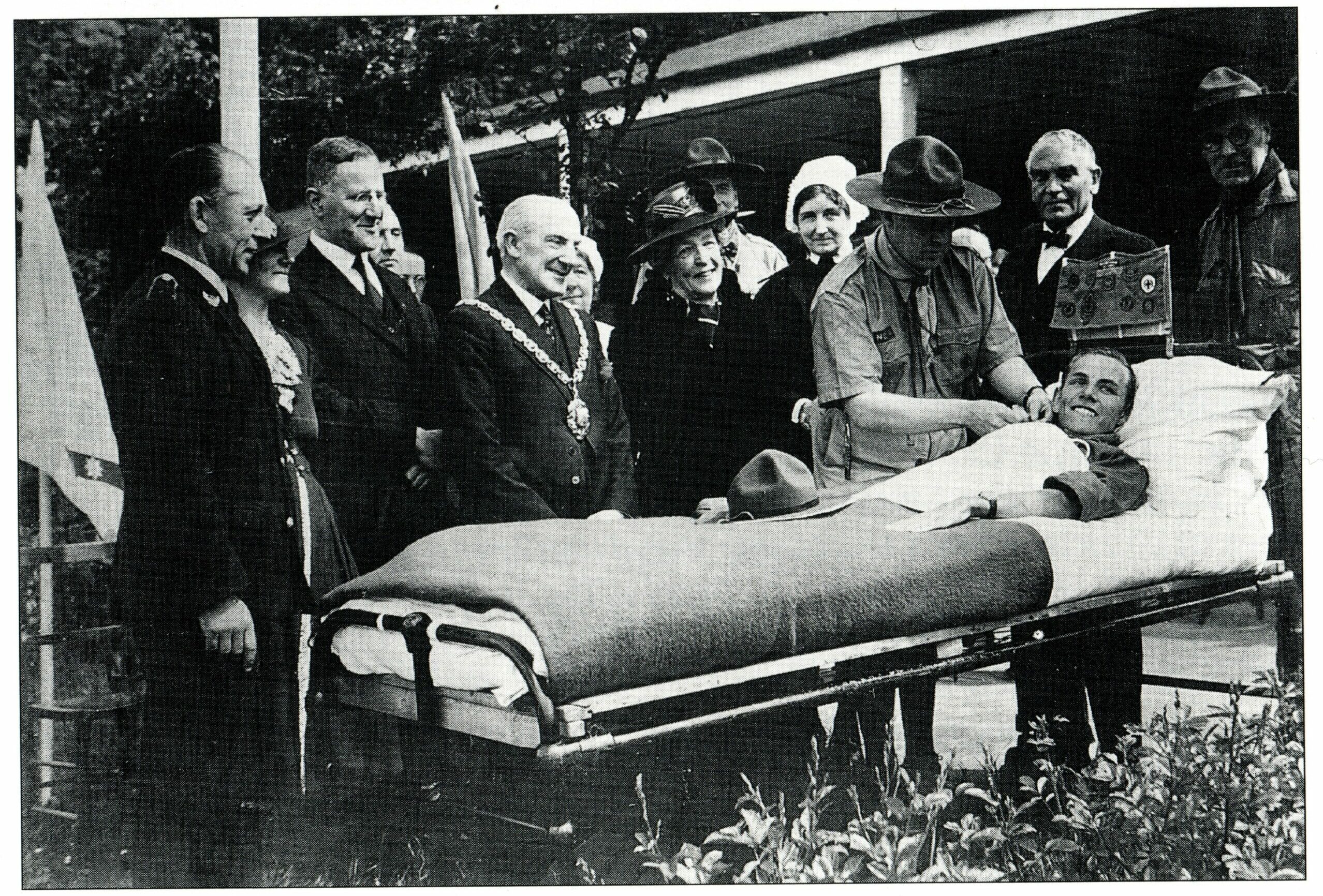
Kenneth Newman receives the Scouts’ VC. Image from The World of Netlam Bigg by John Gardiner, reproduced with permission.
Kenneth Newman’s story captures the courage and dignity at the heart of Standish House Scouting.
- Standish House Scout: Kenneth was a member of the Standish House Scout Group.
- Cornwell Decoration: he received one of Scouting’s highest recognitions for bravery and character.
- 1939: the year he received the award.
- First in Gloucestershire: he was the first Gloucestershire Scout to receive the honour.
- Known as the Scouts’ VC: the award was widely understood as a recognition of exceptional courage.
- Enduring example: his story remains central to the Standish House legacy.
Later Standish House Scouting
The Standish House Scouting story did not end with the founding of the troop and pack in the 1930s. The photographs and records show that Scouting continued to have a presence at Standish Hospital in later years.
The Wolf Cub gathering photographed around 1960 shows the continuing link between Standish Hospital and Scouting. It is a later image, but it belongs to the same tradition that began when Netlam Bigg founded the group in 1934: young people at Standish being brought into the Scout family.
The story also continued through links with other groups. Standish House Scouts camped with other local Scouts, including St Lawrence Scouts. This practical connection is important because it shows that Standish House Scouting was woven into the wider life of local Scouting.
Standish House Scout Group was not just a one-off act of kindness. It became part of a longer local Scouting story involving ceremonies, camps, visitors, field days, international links and continuing activity at Standish Hospital.
The link to St Lawrence and Stroud Valley Scouts
The Standish House story connects directly to the story of St Lawrence Scout Troop and, through that, to today’s Stroud Valley Scout Group.
Netlam Bigg founded Standish House Scout Group in 1934. Three years later, in 1937, he re-established St Lawrence Scout Troop in Stroud. St Lawrence had first begun in 1928, ceased in 1931, and was then revived under Netlam’s leadership.
There was also a personal leadership link. Charles Docwra, who later helped with St Lawrence, had previously been Cubmaster of Standish House. This means the connection between the two stories was not simply that Netlam Bigg was involved in both; people and experience moved between them.
Standish House Scouts later joined St Lawrence Scouts at camp, including at Congresbury in 1952. They also camped with St Mary’s Woodchester. These camp links show the practical fellowship between Standish House and other local Scout groups.
The Standish House and St Lawrence stories are linked by people, leadership and shared Scouting values.
- 1934: Netlam Bigg founded Standish House Scout Group.
- 1937: Netlam Bigg re-established St Lawrence Scout Troop.
- Charles Docwra: previously Cubmaster at Standish House and later connected with St Lawrence.
- Congresbury camp: Standish House Scouts later joined St Lawrence Scouts at camp.
- St Mary’s Woodchester: Standish House Scouts also camped with other local Scouts.
- Stroud Valley Scouts: today’s group continues the wider St Lawrence and Stroud Scouting story.
Why this story matters today
Standish House Scout Group matters because it shows what Scouting can be at its best. It was imaginative, compassionate and practical. It did not define young people by illness or disability. It gave them the identity, structure, friendship and recognition of Scouting.
It also shows something important about the local character of Scouting around Stroud. This was not only about weekly meetings in a hall. It was about service, community, connection and making sure young people were included.
That is why Standish House belongs in the story of Stroud Valley Scouts. Through Netlam Bigg, Charles Docwra, St Lawrence Scout Troop and the wider local Scout network, the Standish House story is part of the heritage we inherit today.
Continuing the legacy: Stroud Valley Scouts today continues the same broad tradition: helping young people gain confidence, make friends, serve their community and experience adventure.
The Standish House story reminds us that Scouting has always been at its strongest when it reaches out and gives young people opportunities they might otherwise never have had.
Help us keep Scouting accessible today
Standish House Scout Group was built on the belief that young people should not miss out on Scouting because of the circumstances they face.
That same belief matters today. Donations help Stroud Valley Scouts keep Scouting affordable, provide equipment, support families where cost is a barrier, and give more young people the chance to belong, take part and experience adventure.
Continue exploring our history
Go back to the main Our History page to explore the full story of Netlam Bigg, St Lawrence, Hollow Lane, Kandersteg and Stroud Valley Scouts.
Read how St Lawrence Scout Troop first began in 1928 and was re-established by Netlam Bigg in 1937.
Follow the story of the St Lawrence Scouts who fundraised locally and travelled from Stroud to Switzerland in 1949.
Sources and acknowledgements
This page has been adapted from The World of Netlam Bigg: A Centenary Celebration, researched by John Gardiner and published in 1999. Material and images from the book are reproduced with permission.
The account has been rewritten for the Stroud Valley Scouts website using contemporary language while preserving the people, dates, events and meaning of the original history.
Historic image credits: unless otherwise stated, images are from The World of Netlam Bigg by John Gardiner, reproduced with permission.