In 1949, Scouts from St Lawrence travelled from Stroud to Kandersteg in Switzerland. It was an ambitious international expedition, made possible through local fundraising, waste paper collections, practical preparation and the determination of Scouts, leaders and supporters.
Kandersteg 1949
From Stroud to Switzerland
The Kandersteg expedition is one of the great adventure stories in the history of St Lawrence Scout Troop. It brought together fundraising, international friendship, Alpine adventure and the belief that Scouting should open the world to young people.
- 1948: the idea developed after camp at Crickhowell
- 1949: St Lawrence Scouts travelled to Kandersteg in Switzerland
- £18: the final cost per Scout after fundraising
- Waste paper collections: Scouts collected paper and cardboard every Saturday for around a year
- International patrols: Scouts met and worked with Scouts from several other countries
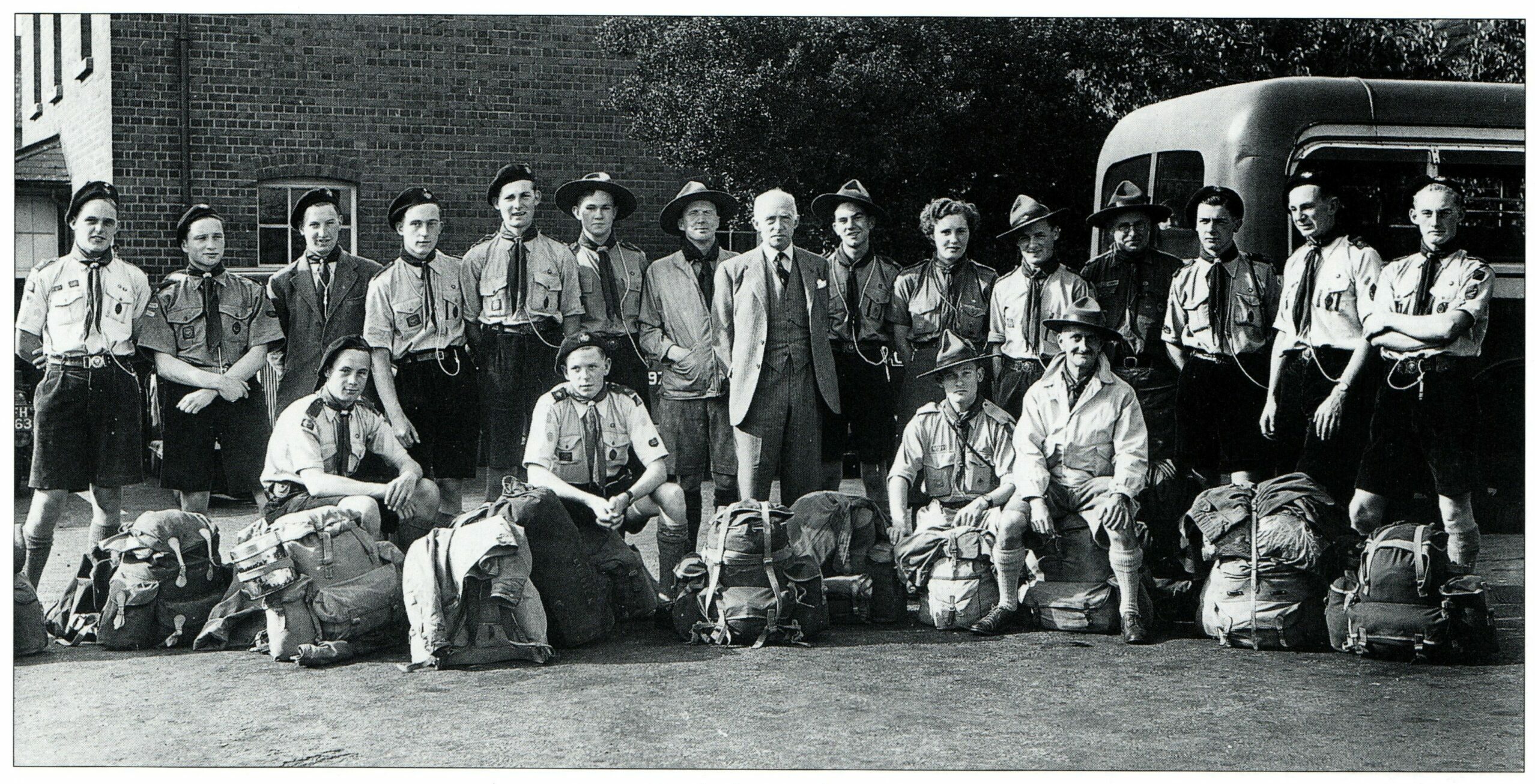
St Lawrence Scouts ready for Kandersteg in 1949. Image from The World of Netlam Bigg by John Gardiner, reproduced with permission.
On this page
- The idea for Kandersteg
- Fundraising through waste paper collections
- Preparing for the journey
- The journey from Stroud to Switzerland
- Arrival at Kandersteg
- International Scouting
- Alpine adventure
- Netlam Bigg and the spirit of the trip
- Remembering the expedition
- Following in their footsteps today
- Help today’s Scouts continue the tradition
The idea for Kandersteg
The idea for the Kandersteg expedition grew after a St Lawrence camp at Crickhowell in August 1948. Following that camp, Netlam Bigg and the Group Scoutmaster, Howard “Skipper” Weston, discussed the possibility of taking senior Scouts abroad.
The destination was Kandersteg in Switzerland, already an important place in international Scouting. For a local Scout Troop in post-war Britain, the idea was ambitious. It required organisation, fundraising, preparation, travel planning and a great deal of confidence.
Netlam Bigg was central to making the expedition happen. He helped arrange the practical details and worked with the leaders and senior Scouts to turn the idea into a real journey.
Only a few years after the end of the Second World War, St Lawrence Scouts were preparing to travel across Europe, meet Scouts from other countries and take part in Alpine adventure at Kandersteg.
Fundraising through waste paper collections
The Kandersteg expedition was not simply paid for by families. The Scouts worked for it.
For around a year, senior Scouts collected waste paper and cardboard every Saturday morning. They pushed a heavy handcart through the streets of Stroud, visiting shops and collecting materials that could be sold to raise funds.
The paper and cardboard were stored at Hollow Lane, the home of St Lawrence Scout Troop. This linked the expedition to the group’s headquarters and to the earlier wartime Waste Paper Campaign, in which Scouts had collected huge quantities of paper as part of the wider salvage effort.
Through this work, the cost of the expedition was reduced to £18 per head. That figure is a major part of the story because it shows how determined the group was to make the trip possible for the Scouts taking part.
The Kandersteg expedition was built through practical local fundraising.
- Every Saturday: Scouts collected waste paper and cardboard.
- Around one year: the fundraising effort was sustained over many months.
- Handcart through Stroud: Scouts pushed a heavy cart around local shops.
- Hollow Lane: collected paper and cardboard were stored at the Scout headquarters.
- £18 per head: the final cost of the expedition after fundraising.
- Shared effort: the trip was made possible by work, organisation and community support.
This was Scouting in its most practical form: young people working together, serving their community, raising funds and earning their way towards an adventure.
Preparing for the journey
The preparation for Kandersteg involved far more than simply booking tickets. For many of the Scouts, this would have been a major journey into unfamiliar territory.
Boots were an important part of the preparation. Army boots were obtained, and a local cobbler fitted them with steel kegs so that the Scouts were better equipped for mountain walking and Alpine conditions.
The practical details continued. Passport photographs were taken at the Chief’s home, and Netlam Bigg arranged the rail tickets. These small details bring the story to life because they show the amount of planning needed for an overseas Scout expedition in 1949.
Army boots were prepared for the Scouts, with steel kegs fitted by a local cobbler.
Passport photographs were taken at the Chief’s home as part of the preparation.
Netlam Bigg arranged the rail tickets for the journey across Europe.
The expedition therefore combined the romance of international adventure with the very practical realities of Scout preparation: boots, tickets, kit, passports, fundraising and careful organisation.
The journey from Stroud to Switzerland
The journey itself was part of the adventure. The Scouts travelled from Stroud towards London before continuing across the Channel and through Europe to Switzerland.
They stayed at the Royal Hotel at Paddington and then at Clapham Scout Headquarters, where they met Scouts from New Zealand and Pakistan. This was an early sign of the international character of the expedition.
From London, the route continued from Victoria to Dover, then across to Ostend. From there, the Scouts travelled by rail through Europe, via Berne, and on to Kandersteg.
The route to Kandersteg was a major journey for a local Scout Troop in 1949.
- Stroud: the journey began from the group’s home town.
- Paddington: the Scouts stayed at the Royal Hotel.
- Clapham Scout Headquarters: they met Scouts from New Zealand and Pakistan.
- Victoria to Dover: the route continued towards the Channel crossing.
- Ostend: the Scouts arrived on the continent.
- Berne to Kandersteg: the final stages took them into Switzerland.
The journey was not just transport. It was part of the widening of horizons that Scouting made possible. Young people from Stroud were travelling across borders, meeting Scouts from other countries and heading for one of the great international centres of the movement.
Arrival at Kandersteg
Kandersteg offered the Scouts a completely different landscape from Stroud. They had travelled from the valleys and hills of Gloucestershire to the Swiss Alps, where the scale of the mountains, glaciers and lakes gave the expedition its sense of adventure.
The camp introduced the Scouts to an international community and to a programme of activities that stretched them physically and mentally. This was not a sightseeing trip. It was an active Scout expedition.
The Scouts took part in ropework, ice axe practice, glacier work, climbing, mountain hut visits and mountain rescue activities. The trip also included visits to places such as Oeschinensee and Blausee, giving the Scouts direct experience of the Alpine environment.
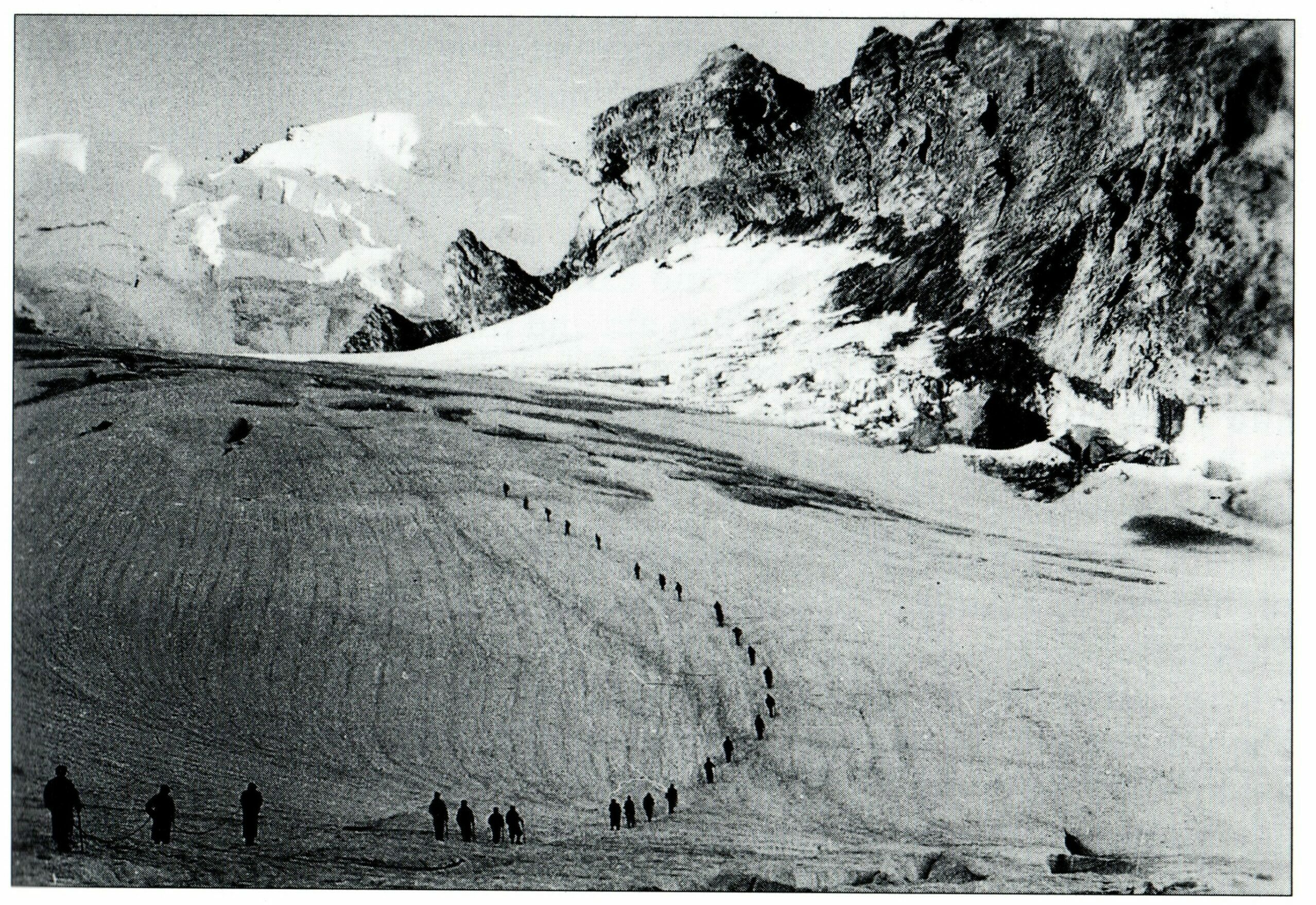
St Lawrence Scouts crossing the glacier during the 1949 Kandersteg expedition. Image from The World of Netlam Bigg by John Gardiner, reproduced with permission.
International Scouting
International friendship was a central part of the Kandersteg expedition. The Scouts did not simply travel abroad as a closed group from Stroud. They joined international patrols and spent time with Scouts and Rovers from other countries.
The records describe international patrols involving Scouts and Rovers from New Zealand, Holland, France, Belgium and Germany.
This international element was especially meaningful in the years after the Second World War. Scouting offered young people a way to meet across national lines, share practical activities and build friendships through common values.
International brotherhood: Netlam Bigg believed strongly in the international character of Scouting. Kandersteg gave St Lawrence Scouts a direct experience of that ideal.
The expedition followed the wider post-war spirit of international Scouting, including the movement’s emphasis on peace, friendship and shared experience.
For Scouts from Stroud, this must have been a powerful experience: meeting other young people from across the world, not as strangers, but as fellow Scouts.
Alpine adventure
The adventure programme at Kandersteg gave the Scouts practical mountain experience. The activities included ropework, ice axe work, glaciers, climbing and mountain rescue. These were demanding experiences that required teamwork, confidence and trust.
The mountains also gave the Scouts a sense of scale and wonder. The expedition took them to places such as Oeschinensee and Blausee, names that remain closely associated with Kandersteg and the surrounding Alpine landscape.
The photograph of Scouts crossing the glacier captures the spirit of the expedition. It shows a group of young people far from home, taking part in real adventure and learning skills in an environment very different from the one they knew in Stroud.
The programme included ropework, ice axe practice, glacier work and climbing.
Alpine activities required trust, discipline and working together as a patrol.
The Scouts experienced lakes, glaciers, mountain huts and the wider Alpine landscape.
It is easy to understand why the expedition became such an important memory for those who took part. It combined effort, travel, friendship, challenge and discovery.
Netlam Bigg and the spirit of the trip
Netlam Bigg’s role in the expedition was central. He helped make the journey possible through organisation and practical support, and his belief in international Scouting shaped the purpose of the trip.
During the expedition, Netlam came from his hotel to hear about the Scouts’ exploits. According to the account in The World of Netlam Bigg, he said that if he had been younger, he would have joined them.
That detail captures something important about Netlam’s character. He was not merely an administrator arranging things from a distance. He took joy in the adventure of Scouting and wanted young people to experience its widest possibilities.
Kandersteg reflected Netlam Bigg’s belief that Scouting could open young people to service, friendship, adventure and the wider world.
Remembering the expedition
The Kandersteg expedition remained important long after the Scouts returned home. It was remembered as one of the great moments in the St Lawrence story.
Later reunions helped preserve the memory of the trip. The story was not only kept in records and photographs; it lived on through the people who had taken part and through the friendships formed by the expedition.
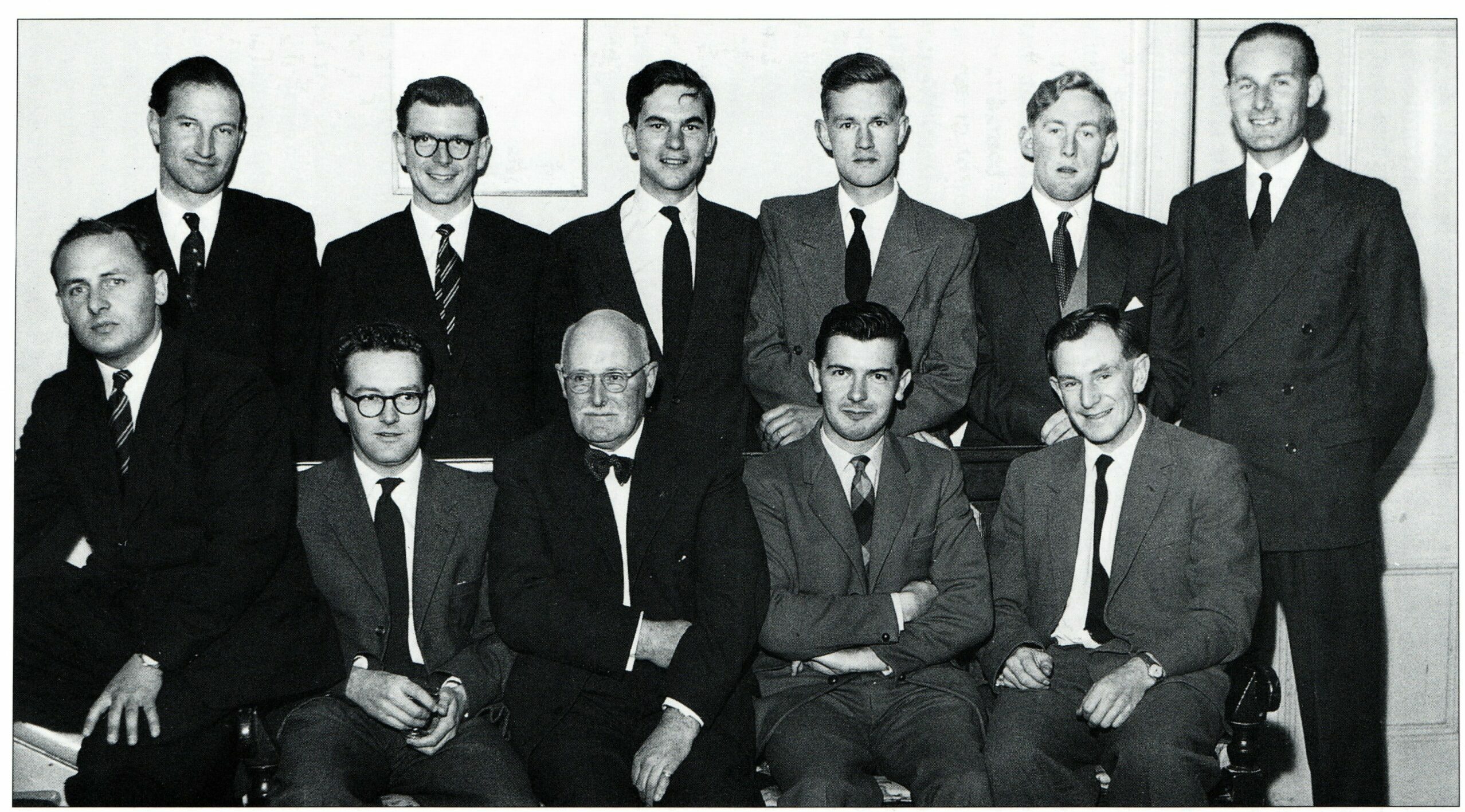
Reunion at Manor Court Hotel. Image from The World of Netlam Bigg by John Gardiner, reproduced with permission.
The photograph of the reunion reminds us that the expedition was more than a trip. It became part of people’s lives and part of the shared memory of St Lawrence Scouts.
Following in their footsteps today
The Kandersteg story has a special meaning for Stroud Valley Scouts today. In 1949, St Lawrence Scouts fundraised locally, prepared carefully and travelled from Stroud to Switzerland. Today, Stroud Valley Scouts are preparing for their own Switzerland adventure.
The circumstances are different, but the thread is the same: young people working towards something bigger than an ordinary weekly meeting, supported by volunteers, families and the local community.
The 1949 expedition shows what Scouting can do. It can take young people beyond familiar places, help them build confidence, introduce them to international friendship and give them memories that last a lifetime.
Continuing the tradition: The 1949 Kandersteg expedition gives today’s Stroud Valley Scouts a powerful historical link to international Scouting and Swiss adventure.
When our Scouts prepare for Switzerland today, they are not starting a new story from scratch. They are following in the footsteps of St Lawrence Scouts who made the journey more than 75 years ago.
Help today’s Scouts continue the tradition
In 1949, local fundraising helped St Lawrence Scouts reach Kandersteg. Today, donations help Stroud Valley Scouts keep adventure accessible for young people across Stroud.
Your support helps us provide equipment, subsidise camps and activities, support families where cost is a barrier, and give more young people the chance to experience Scouting beyond the ordinary weekly meeting.
A short timeline
Key moments in the Kandersteg 1949 story.
- August 1948: the idea developed after camp at Crickhowell.
- 1948–1949: Scouts collected waste paper and cardboard every Saturday for around a year.
- Before departure: boots, passports, photographs and rail tickets were prepared.
- London: the Scouts stayed at Paddington and Clapham Scout Headquarters.
- Dover and Ostend: the route took the Scouts across the Channel and onto the continent.
- Berne to Kandersteg: the final stage took the group into Switzerland.
- Kandersteg: Scouts joined international patrols and took part in Alpine activities.
- Afterwards: the expedition became one of the lasting memories of St Lawrence Scouts.
Continue exploring our history
Go back to the main Our History page to explore the full story of Netlam Bigg, Standish House, St Lawrence, Hollow Lane and Stroud Valley Scouts.
Read the wider St Lawrence story, including wartime service, Air Scouts, Hollow Lane and remembrance.
Read about Netlam Bigg’s wider life, service and role in shaping Scouting around Stroud.
Sources and acknowledgements
This page has been adapted from The World of Netlam Bigg: A Centenary Celebration, researched by John Gardiner and published in 1999. Material and images from the book are reproduced with permission.
The account has been rewritten for the Stroud Valley Scouts website using contemporary language while preserving the people, dates, events and meaning of the original history.
Historic image credits: unless otherwise stated, images are from The World of Netlam Bigg by John Gardiner, reproduced with permission.