Netlam Frederick Cordwell Bigg is one of the central figures in the history of Scouting around Stroud. His work connects Standish House Scout Group, St Lawrence Scout Troop, Hollow Lane, wartime service, international Scouting and the story that leads to today’s Stroud Valley Scouts.
Netlam Bigg and Scouting in Stroud
The Scout leader behind much of our local history
Netlam Bigg was more than a name in an archive. He was a local organiser, philanthropist, churchman, Scout leader and community figure whose work helped shape Scouting in Stroud for generations.
- 1899: born in Rodborough on 1 April
- 1934: founded Standish House Scout Group
- 1937: re-established St Lawrence Scout Troop
- 1938: helped create the St Lawrence headquarters at Hollow Lane
- 1968: appointed MBE
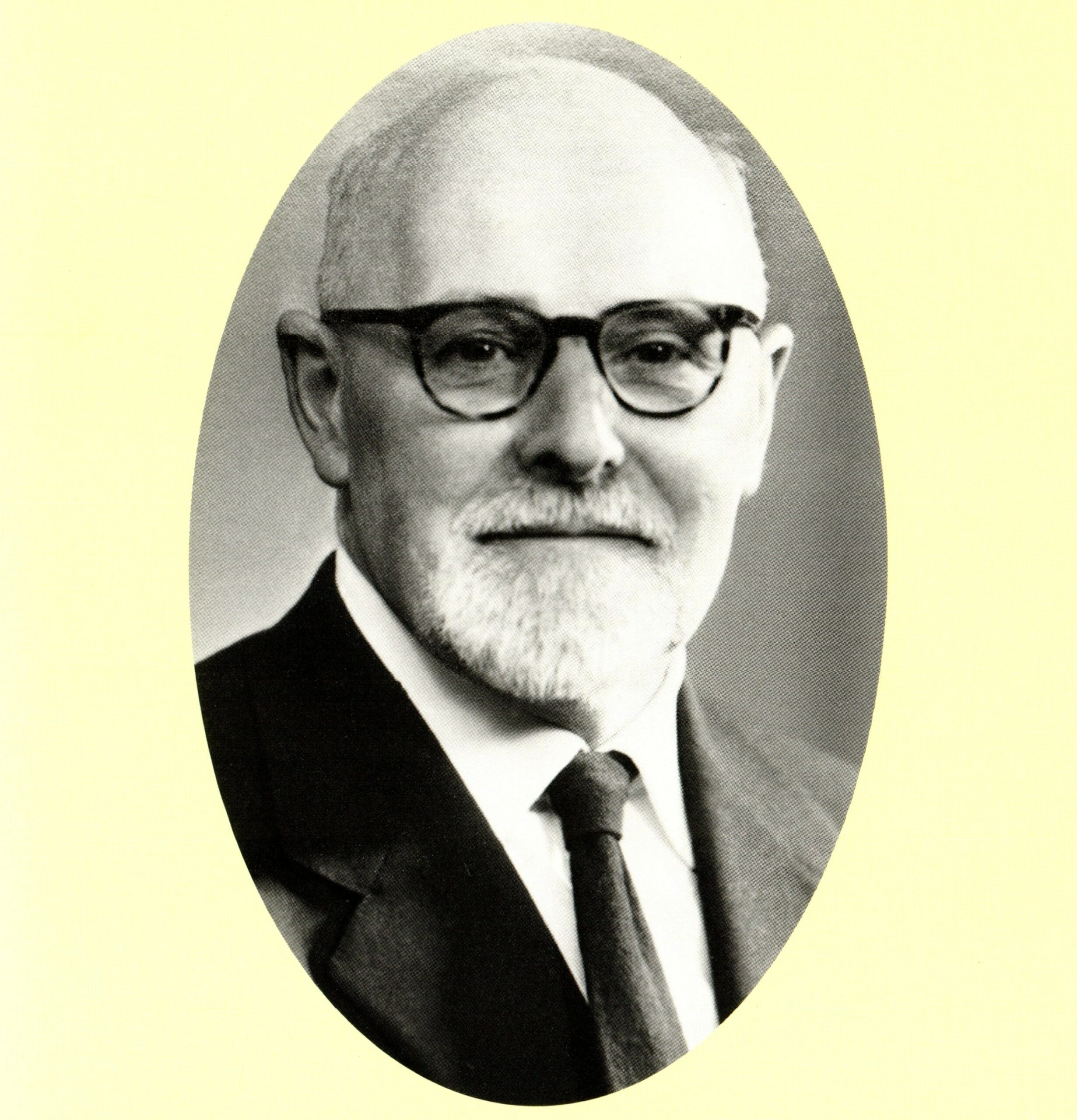
Netlam Frederick Cordwell Bigg. Image from The World of Netlam Bigg by John Gardiner, reproduced with permission.
On this page
- Early life in Rodborough
- A life of local service
- Standish House Scout Group
- Re-establishing St Lawrence Scout Troop
- Hollow Lane and the Scout headquarters
- Wartime service and the Waste Paper Campaign
- Air Scouts and aviation
- International Scouting
- Buckingham Palace and the MBE
- Netlam and Margaret
- His legacy today
- Help continue the work today
Early life in Rodborough
Netlam Frederick Cordwell Bigg was born in Rodborough on 1 April 1899. His life would become deeply connected with the Stroud area, not only through Scouting but through church, community, charitable and cultural work.
The local nature of Netlam’s story matters. He was not an outside figure who briefly passed through Scouting in Stroud. He belonged to the area, knew its people, understood its institutions and used those connections to build opportunities for young people.
Across the story recorded in The World of Netlam Bigg, Netlam appears as someone who combined practical organisation with personal warmth and conviction. He did not simply support good causes from a distance. He organised, arranged, encouraged, led and kept going.
1899
Netlam Bigg was born in Rodborough on 1 April 1899.
Stroud
His life and service were closely connected with the Stroud area.
Service
His Scouting work formed part of a wider life of local service.
A life of local service
Netlam Bigg’s contribution was not limited to one organisation. He was remembered as a local philanthropist, churchman, organiser and supporter of music and drama. His Scouting work sat within this wider pattern of service.
This helps explain why he was able to achieve so much in Scouting. Founding a Scout Group at Standish House, re-establishing St Lawrence Scout Troop, supporting Hollow Lane and organising major efforts such as the Waste Paper Campaign required energy, relationships and credibility across the community.
Netlam’s approach was practical. He saw a need, gathered people, found resources and created structures that could last. That is why so much of the history of Scouting around Stroud seems to pass through him at key moments.
Netlam Bigg’s importance lies not only in the number of roles he held, but in the way he connected people, places and causes. Standish House, St Lawrence, Hollow Lane and Kandersteg all show that same pattern of practical, outward-looking service.
Standish House Scout Group
One of Netlam Bigg’s most remarkable Scouting achievements was the founding of Standish House Scout Group in 1934.
Standish House had been used as a Red Cross hospital during the First World War and later became a hospital site for young people with disabilities or serious illnesses. Netlam saw that boys who were patients at Standish House should not be excluded from the identity, friendship and opportunity of Scouting.
Standish House Scout Group officially began on 26 May 1934 with 21 Scouts. It was described in The World of Netlam Bigg as unique and the first of its kind in the county.
The creation of this group shows the heart of Netlam’s Scouting vision. He did not see Scouting as only for young people who could easily access a normal troop meeting. He saw it as something that could be adapted and brought to those who might otherwise miss out.
Standish House was one of the clearest examples of Netlam Bigg’s inclusive approach to Scouting.
- 1934: Netlam Bigg founded Standish House Scout Group.
- 26 May 1934: the group officially began.
- 21 Scouts: the troop’s starting number.
- 1935: the Standish House Wolf Cub Pack was formally enrolled.
- Purpose: to bring Scouting to boys who were hospital patients.
- Legacy: a pioneering example of inclusive Scouting in the county.
Re-establishing St Lawrence Scout Troop
Netlam Bigg’s next major Scouting contribution was the re-establishment of St Lawrence Scout Troop in 1937.
St Lawrence had first begun in April 1928 under the Revd Arthur Braybrooke. That first troop ceased in 1931 after leadership changes. Netlam did not create St Lawrence from nothing, but he revived and strengthened it at a crucial moment.
The re-established troop was registered on 15 January 1937 and began with 16 Scouts and 8 Wolf Cubs. Netlam was assisted by Charles Docwra as Scoutmaster, the Revd George Meek as Assistant Scoutmaster, and Albert Matty as Cubmaster.
This revival became one of the foundations of the story that leads to today’s Stroud Valley Scouts. Through St Lawrence, Netlam’s Scouting work became rooted at Hollow Lane and developed into a wider story of service, adventure, remembrance and international friendship.
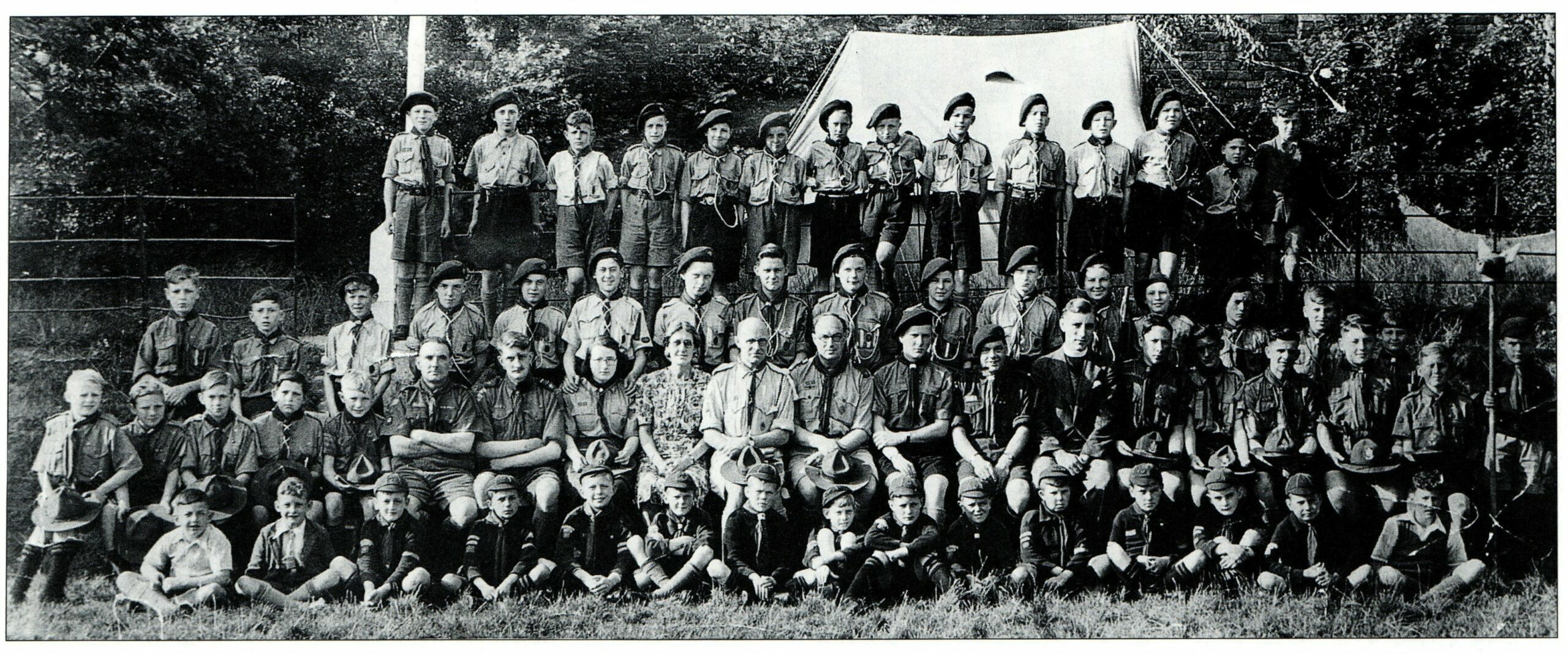
St Lawrence Scout Troop, around 1942. Image from The World of Netlam Bigg by John Gardiner, reproduced with permission.
Hollow Lane and the Scout headquarters
Netlam Bigg’s work with St Lawrence was closely connected to the creation of a permanent headquarters and training ground at Hollow Lane.
The site was a half-acre piece of land owned by Mrs Bigg. A large hut, approximately 60 feet by 27 feet, was donated by Mr A. C. Cook. The hut provided a main hall, a meeting room and two smaller rooms.
A smaller hut was used as the Rover Den, while greenhouses were converted into a kitchen, toilets and storerooms. The new St Lawrence headquarters and training grounds were officially opened on Saturday 17 September 1938 by Lt Col G. Walton, Home Commissioner from Imperial Headquarters.
Hollow Lane became more than a convenient meeting place. It became the physical home of St Lawrence Scouting and later part of the story of the Stroud Valley Scouting Centre.
Hollow Lane shows Netlam Bigg’s ability to turn support, land and local goodwill into lasting facilities for Scouting.
- Mrs Bigg: owned the half-acre Hollow Lane site.
- A. C. Cook: donated the large hut for the Scouts.
- 60 feet by 27 feet: the approximate size of the main hut.
- Rover Den: a smaller hut was used by the Rovers.
- Greenhouses: converted into kitchen, toilets and storerooms.
- 17 September 1938: the headquarters and training grounds were officially opened.
Wartime service and the Waste Paper Campaign
During the Second World War, Netlam Bigg and the St Lawrence Scouts were involved in practical service to the local community.
Scouts supported the Stroud Women’s Voluntary Service by collecting materials such as bones, old iron and rags. Netlam also represented the Scout Association on the Evacuation Reception Committee, while senior Scouts helped evacuees at Tuck’s Hall on Sundays.
St Lawrence Scouts and Stroud and Uplands Scouts helped with fire watches at Stroud General Hospital. They also ran messages and manned telephones at the Trinity Rooms and First Aid Post.
In February 1940, Netlam was appointed organiser of the Waste Paper Campaign by the Stroud and Tetbury Scouts’ Association. Over seven years, Scouts collected nearly 1,500 tons of paper and raised around £7,000 for Scouting.
The wartime years show Netlam Bigg as both Scout leader and practical community organiser.
- Women’s Voluntary Service: Scouts supported local salvage collections.
- Evacuation Reception Committee: Netlam represented the Scout Association.
- Tuck’s Hall: senior Scouts helped evacuees on Sundays.
- Stroud General Hospital: Scouts assisted with fire watches.
- February 1940: Netlam became organiser of the Waste Paper Campaign.
- Nearly 1,500 tons: the amount of paper collected over seven years.
This wartime work is central to understanding Netlam’s leadership. He believed Scouting should be useful. It should build young people, but it should also serve the community around them.
Air Scouts and aviation
In July 1941, Netlam Bigg received permission to start the first Air Scout troop in Gloucestershire. This gave St Lawrence a distinctive wartime identity and opened up aviation-related opportunities for the Scouts.
The St Lawrence Air Scouts developed links with RAF Aston Down. Their activities included aircraft identification, use of a link trainer and flights in Miles Master aircraft.
The Air Scouts’ colours were presented and dedicated in March 1943. In April 1943, the group camped at RNAS Yeovilton. Their Drum and Fife Band also became part of their public identity.
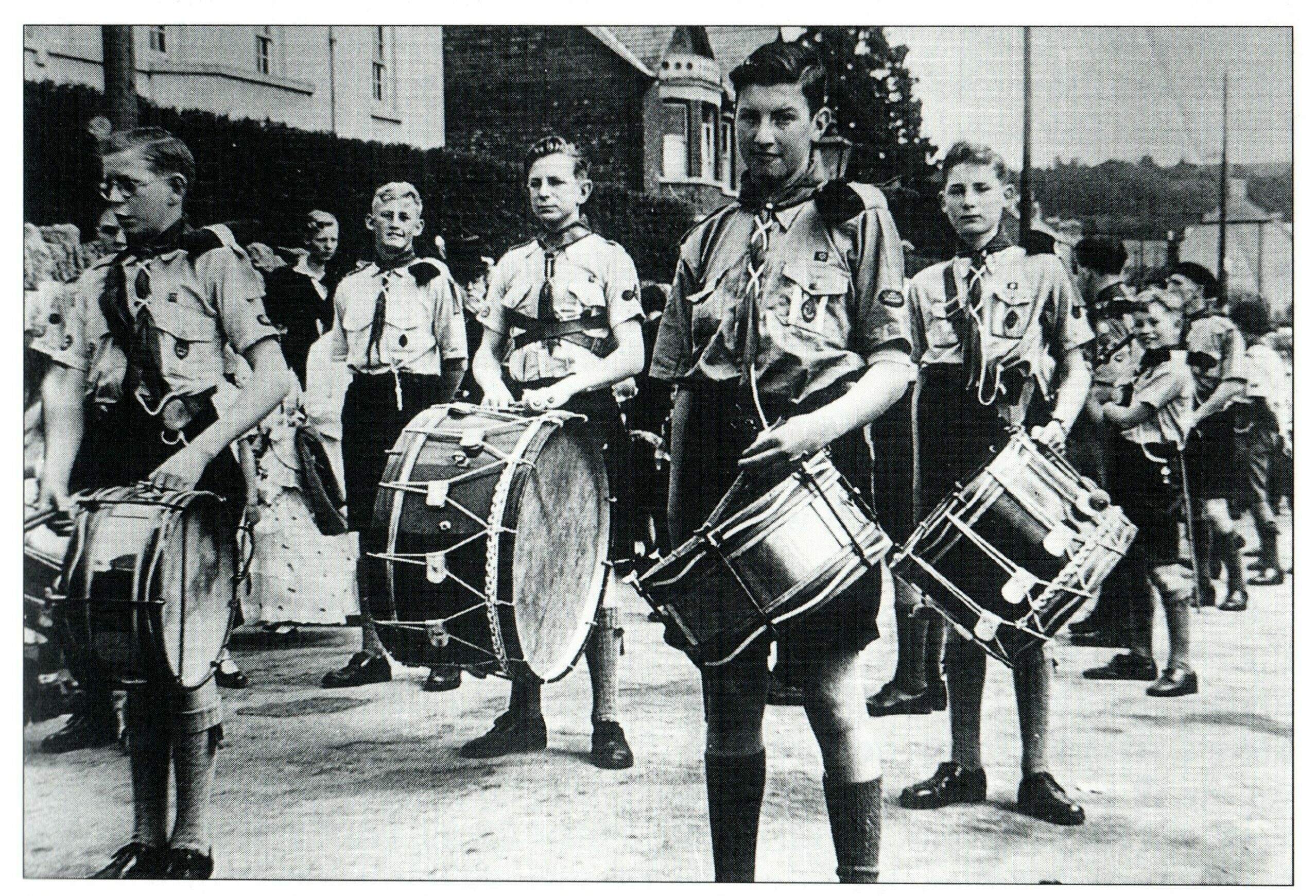
St Lawrence Air Scouts Drum and Fife Band. Image from The World of Netlam Bigg by John Gardiner, reproduced with permission.
The Air Scout story shows Netlam’s willingness to keep Scouting relevant and ambitious. St Lawrence was not simply maintaining a standard programme. It was adapting to the moment and giving young people access to serious skills and experiences.
International Scouting
Netlam Bigg strongly believed in the international brotherhood of Scouting. That belief appears throughout the history: in Standish House’s links with Argentine Scouts, in the post-war Scouting movement, and most clearly in the 1949 Kandersteg expedition.
In 1947, Scouts from many countries came together at the Jamboree of Peace in France. More than 30,000 Scouts from around 40 countries attended. The event reflected the post-war hope that Scouting could help build friendship and understanding between nations.
The Kandersteg expedition followed in that same spirit. After a 1948 camp at Crickhowell, Netlam Bigg and Group Scoutmaster Howard “Skipper” Weston discussed the idea of taking senior Scouts abroad. Netlam helped make the plan happen.
In 1949, St Lawrence Scouts travelled from Stroud to Switzerland, having fundraised through waste paper and cardboard collections. At Kandersteg, they joined international patrols and met Scouts and Rovers from countries including New Zealand, Holland, France, Belgium and Germany.
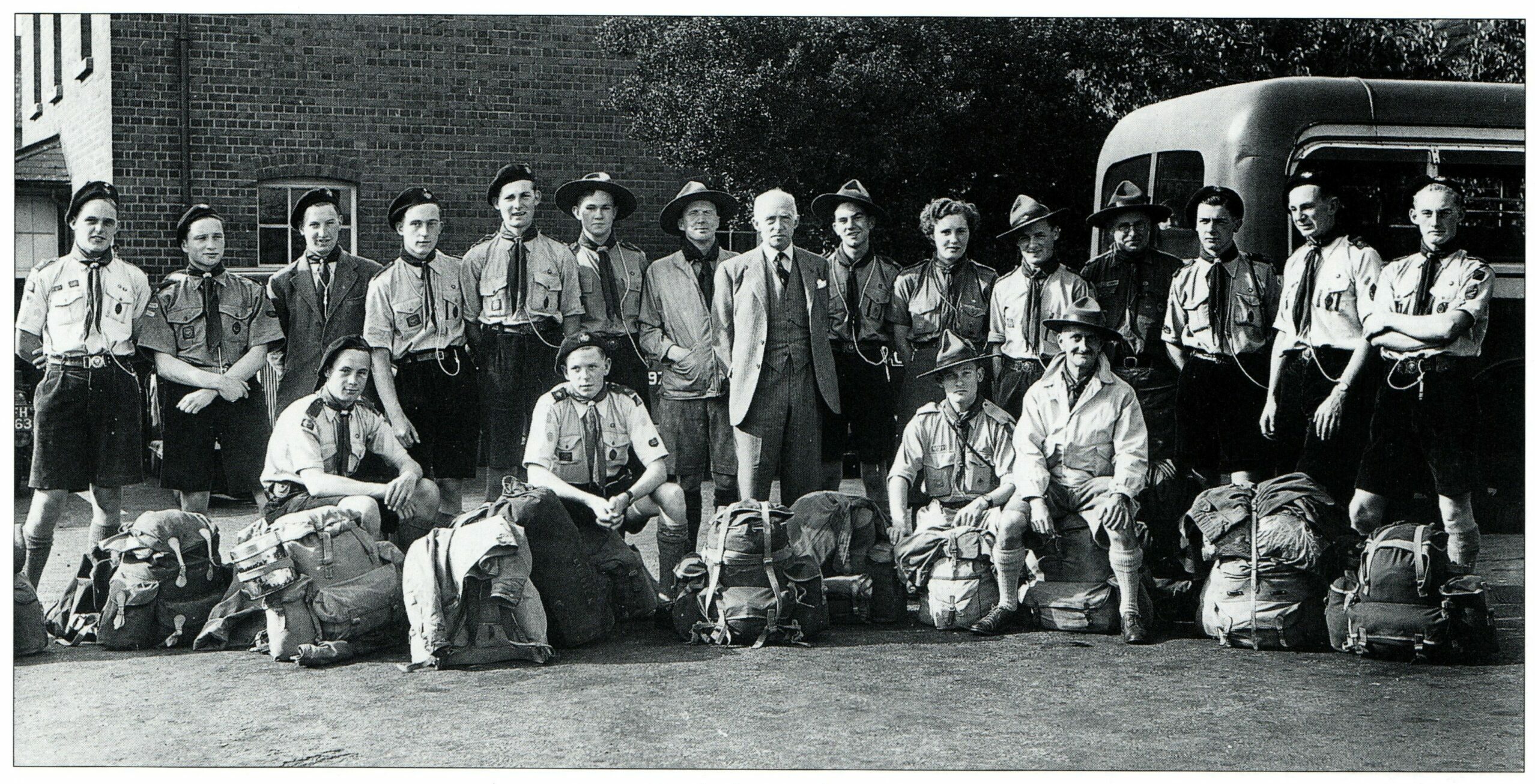
St Lawrence Scouts ready for Kandersteg in 1949. Image from The World of Netlam Bigg by John Gardiner, reproduced with permission.
International friendship: Netlam Bigg’s Scouting vision reached beyond Stroud. He believed that Scouting could connect young people across borders through shared service, adventure and friendship.
This is why the Kandersteg story remains so important for Stroud Valley Scouts today, especially as our current Scouts prepare for their own Switzerland adventure.
Buckingham Palace and the MBE
Netlam Bigg’s long record of service was recognised nationally. In 1968, he was made an MBE.
The award recognised a life of practical public service. By then, Netlam had already made a lasting contribution to Scouting, church life, local community work and the wider civic life of Stroud.
The photograph of Netlam and Margaret outside Buckingham Palace captures one of the most visible public recognitions of that work. It belongs in the Scouting story because his service to Scouting was such a major part of the life being recognised.
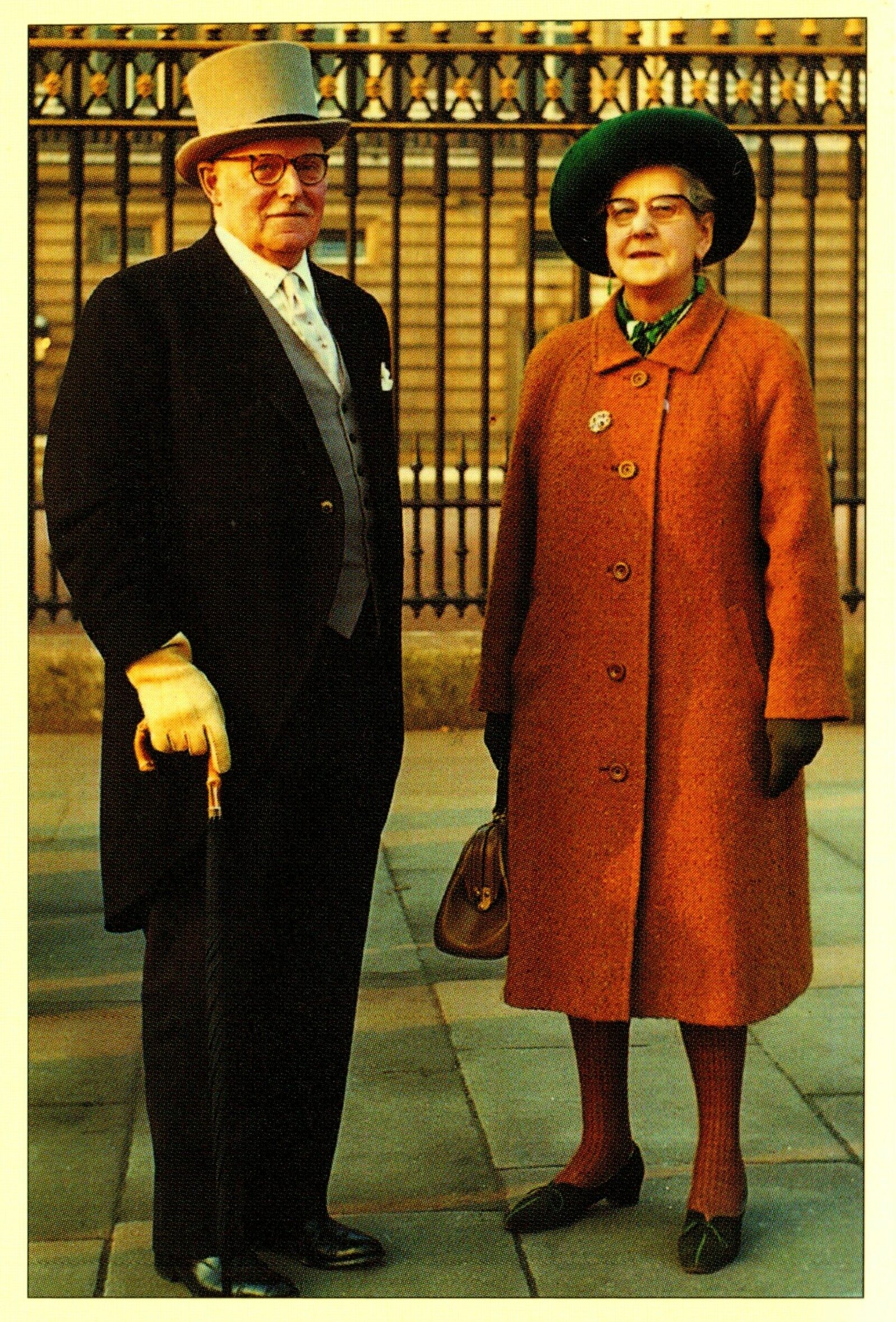
Netlam Bigg and Margaret outside Buckingham Palace. Image from The World of Netlam Bigg by John Gardiner, reproduced with permission.
The MBE was a national recognition of a long life of local service.
- 1968: Netlam Bigg was appointed MBE.
- Scouting: his work with Standish House, St Lawrence and wider Scouting formed a major part of his service.
- Community: he was also active in church, charitable and cultural life.
- Margaret Bigg: stood alongside Netlam through much of the story recorded in the archive.
Netlam and Margaret
Margaret Bigg appears throughout the wider story of Netlam’s life. The history of local service is rarely the work of one person alone, and the records and photographs make clear that Margaret was an important presence in Netlam’s life.
The Hollow Lane story itself includes Mrs Bigg through the land that became the St Lawrence headquarters site. The later photographs of Netlam and Margaret, including their Golden Wedding celebrations, show the personal life behind the public service.
For a website history page, this matters because it helps us see Netlam not simply as a formal Scout official, but as a person rooted in family, community and long-term commitment.
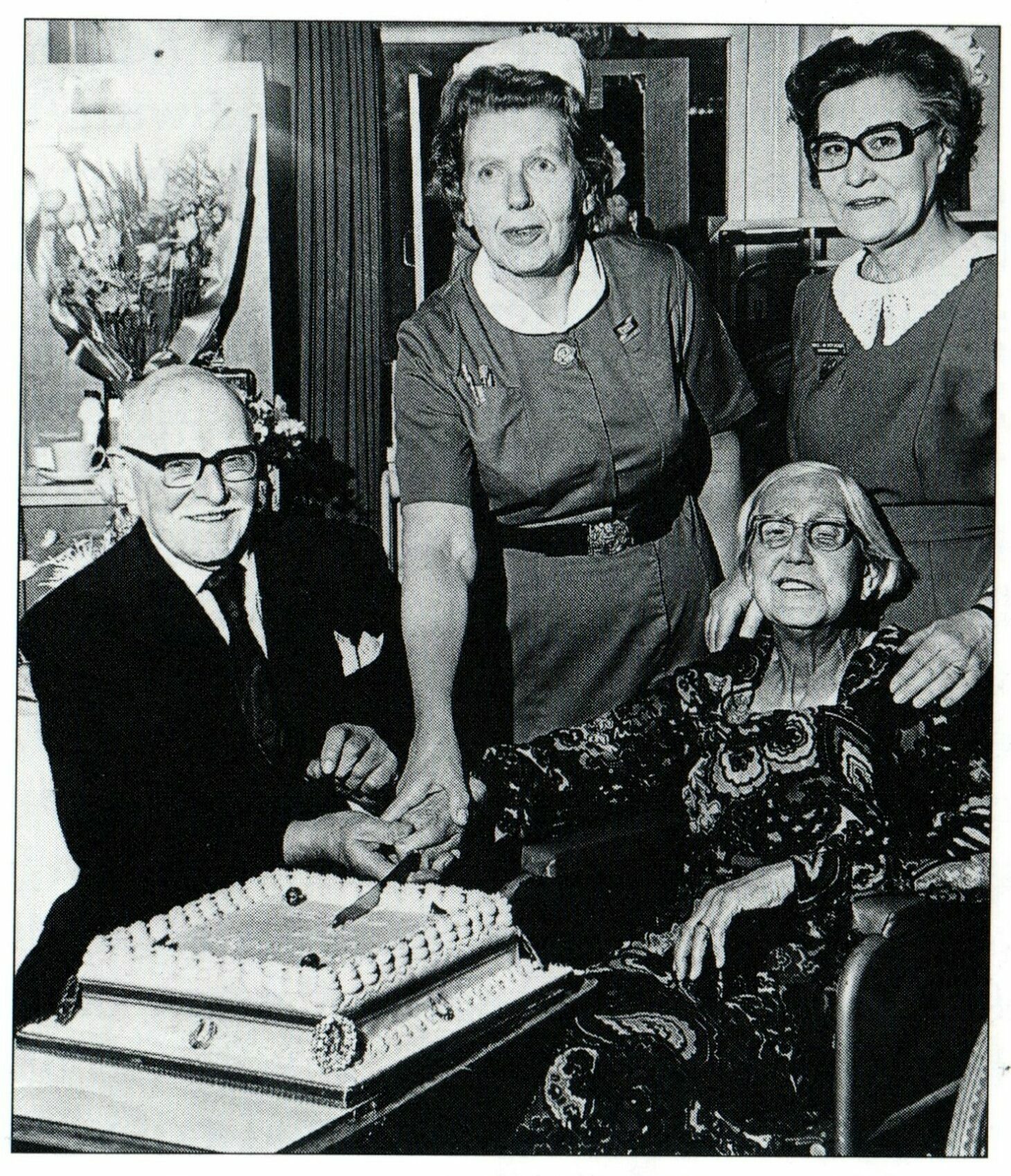
Netlam and Margaret cutting their Golden Wedding cake. Image from The World of Netlam Bigg by John Gardiner, reproduced with permission.
The archive also includes photographs that reflect Netlam’s wider interests and outlook beyond Stroud. These sit alongside his Scouting work as part of a broader life of service, faith, travel, community and friendship.
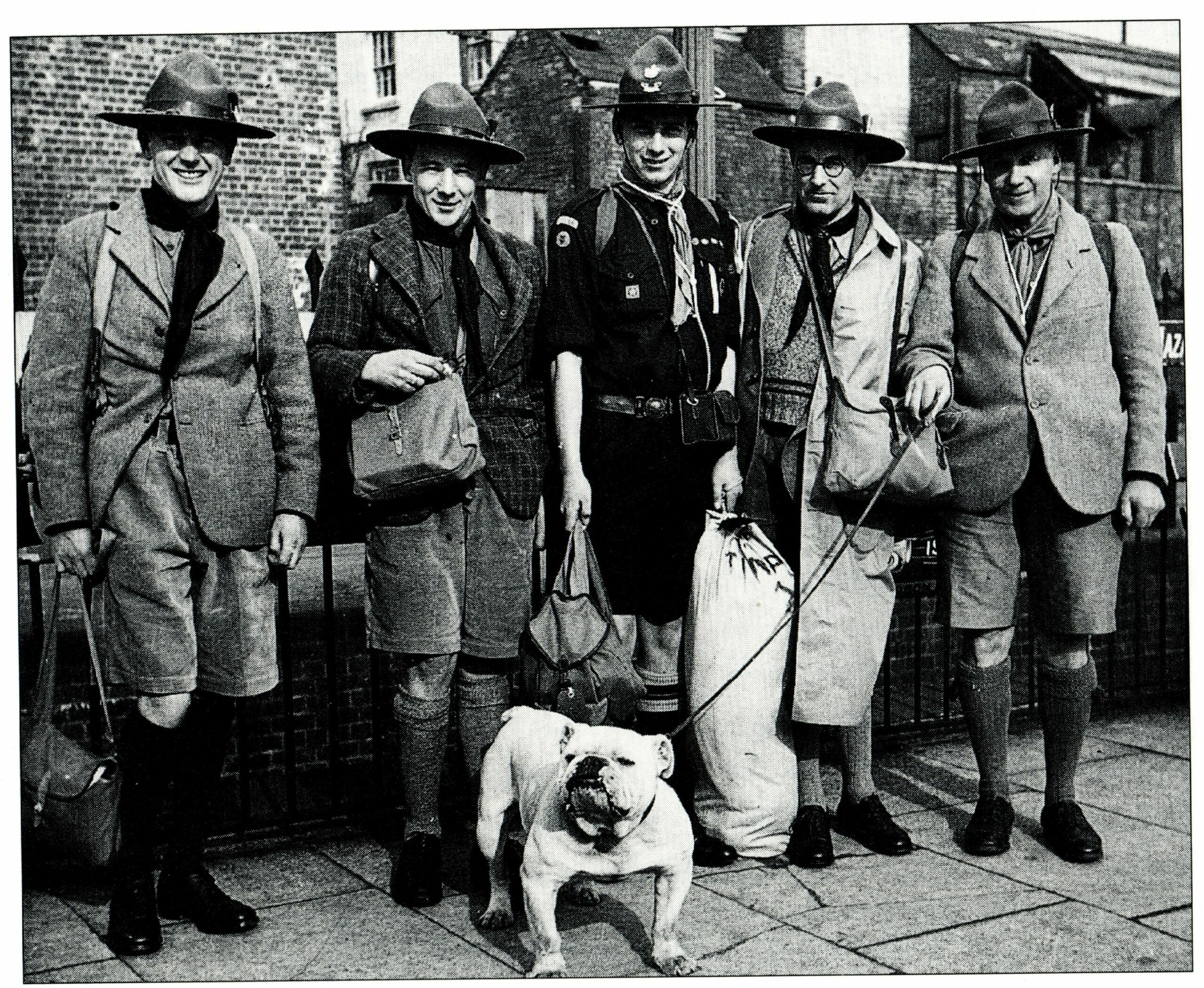
Setting off for the Middle East. Image from The World of Netlam Bigg by John Gardiner, reproduced with permission.
His legacy today
Netlam Bigg’s legacy is visible across the history of Stroud Valley Scouts. Standish House shows his commitment to inclusive Scouting. St Lawrence shows his ability to revive and organise a local Scout Group. Hollow Lane shows his practical work in creating a lasting home for Scouting. Kandersteg shows his belief in international friendship and adventure.
The story also shows that local Scouting has always depended on people who are willing to give time, energy, imagination and persistence. Netlam Bigg did not simply hold a title. He made things happen.
Today’s Stroud Valley Scouts continues a story shaped by people like Netlam and Margaret Bigg, Charles Docwra, Albert Matty, Howard Weston and many others whose work created the foundations we still benefit from.
Netlam Bigg’s Scouting legacy can be seen through four connected stories.
- Standish House: inclusive Scouting for boys who were hospital patients.
- St Lawrence: a revived and strengthened Scout Troop in Stroud.
- Hollow Lane: a lasting home and training ground for local Scouting.
- Wartime service: Scouts serving the community in practical ways.
- Air Scouts: ambition, aviation and wartime youth opportunity.
- Kandersteg: international friendship, adventure and Scouting beyond Stroud.
Continuing the story: Stroud Valley Scouts today continues the same broad tradition of service, belonging, adventure and opportunity.
Netlam Bigg’s story reminds us that Scouting is built by people who see what young people could experience — and then do the practical work needed to make it happen.
Help continue the work today
Netlam Bigg’s legacy shows what local people can achieve when they give time, energy, resources and belief to young people.
Your donation helps Stroud Valley Scouts continue that practical work today: keeping Scouting affordable, maintaining and improving our Scout Centre, providing equipment and activities, supporting families where cost is a barrier, and giving more young people the chance to experience skills for life.
A short timeline
Key moments in Netlam Bigg’s Scouting story.
- 1 April 1899: Netlam Frederick Cordwell Bigg is born in Rodborough.
- 1934: he founds Standish House Scout Group.
- 1936: he is appointed Assistant County Secretary for Scouts with disabilities.
- 15 January 1937: the re-established St Lawrence Scout Troop is registered.
- 17 September 1938: the St Lawrence headquarters opens at Hollow Lane.
- February 1940: Netlam becomes organiser of the Waste Paper Campaign.
- July 1941: permission is given to start Gloucestershire’s first Air Scout troop.
- 1949: St Lawrence Scouts travel to Kandersteg in Switzerland.
- 1968: Netlam Bigg is appointed MBE.
- 1982: the Stroud Valley Scouting Centre is officially opened, continuing the Hollow Lane legacy.
Continue exploring our history
Go back to the main Our History page to explore the full story of Standish House, St Lawrence, Hollow Lane, Kandersteg and Stroud Valley Scouts.
Read about the pioneering Scout Group founded by Netlam Bigg for boys who were hospital patients at Standish House.
Read how Netlam Bigg re-established St Lawrence Scout Troop and helped shape the roots of today’s group.
Sources and acknowledgements
This page has been adapted from The World of Netlam Bigg: A Centenary Celebration, researched by John Gardiner and published in 1999. Material and images from the book are reproduced with permission.
The account has been rewritten for the Stroud Valley Scouts website using contemporary language while preserving the people, dates, events and meaning of the original history.
Historic image credits: unless otherwise stated, images are from The World of Netlam Bigg by John Gardiner, reproduced with permission.